(RE-post) Embracing the Prophetic Blessing
 I originally published this post on October 27, 2014, as I processed the prophetic dimension to my DMiss literature review. I’m posting it again today as I prep two messages that I will deliver next week at Fresno Pacific University’s chapel services on the topic of male privilege. It’s my hope that the men of FPU will honestly wrestle with what is sure to be a new (and prophetic) teaching for most of them. Join me in praying; I speak on Wednesday and Friday mornings at 10am PST.
November is an anniversary month for me.
In November of 1996, after about 10 months of full-time fundraising and part-time Junior High study hall proctoring, I started getting paid to do ministry. It’s still mind-boggling to me that what started as a 3 year “blip” between college and the “real world” has now lasted 18 years.
Indeed, somewhere along the way, vocational ministry became the real world!
And when you’ve been doing this 18 years, you’ve learned a few things. For instance, I’ve learned how I’m wired (and how I’m not). I am an introvert. I love to write. Put me in charge of a conference, or a system, or a project, and you’ll be in good shape. And, for the love of God, let’s have fun while we’re doing our ministry work.
I’ve also learned how I’m gifted. Like spiritually gifted. And, for the most part, my gifts are in the “behind the scenes” things. I’m a director/administrator. I like to help new things happen. I have a passion for service.
Truth be told, at least in my contexts, this gift mix makes me somewhat unique. Because many of the ministers around me are gifted in different, “louder” areas. Like preaching. Or evangelism. Or discernment. Or healing. Or pastoring.
Which is why my initial reaction to being blessed to be a prophet caused me to recoil.
There I was, two weeks ago now, in a corporate prayer time, when a good friend of mine came over to me, laid his hand on my shoulder, and whispered this in my ear:
“I think God wants me to anoint you to be a prophet in your DMiss work.”
Me? A prophet?!? Heck no.
I mean, have you read the Old Testament? As a group, prophets strike me as ornery and cantankerous. They probably smell bad. They eat locusts. No one likes them. It’s like they’re permanently pissed off and in turn want to piss others off.
If that’s what the prophetic blessing entails, I’ll pass.
But, as I’ve received that prayer blessing and pondered it a bit, what if there was room for a different kind of prophetic ministry? Maybe one that involves writing. Or blogging. Or a certain DMiss program? What if you could speak truth into the culture–into the church culture–by doing excellent research, reading and writing?
Several months ago, I introduced you to F. Pierce Beaver, missiologist, professor, and prophet. In writing about the profession of missiology, my chosen field of study, Beaver wrote this:
“The missiologist is called to be the pioneer and to blaze the trail. The missionary will not escape from his (or her) uncertainty until the missiologist points the way, and the church will not move ahead in mission unless the missiologist sounds a ‘prophetic call.’”
Today I’ll start writing my Literature Review in earnest. The idea will be to enter the “conversation” that other authors, theologians, sociologists and historians have been having about my topic of inter-gender partnerships in mission. Over the course of some 50 pages, I’ll hope to discern what could make such partnerships flourish, in my organization and, more broadly, in the church.
And, in all of it, I’ll hope to be prophetic.
So, this introverted, fun-loving administrator is going to take his prophetic unction out for a test spin. We’ll see how this goes. I’m all in.
Well, except for the locust-eating part…
In Their Words…
 Well, I hope you can handle one more post in response to last week’s events, because that’s what you’re getting today!
In case you missed it, last Thursday morning, my post “5 Reasons Not to Use Gender-Based Jokes in the Pulpit” went live on The Junia Project blog. And then madness ensued. Right now, it’s been viewed over 14,000 times, and that’s incredible. To be honest, it’s simultaneously exciting and overwhelming.
Next, on Monday, I published some reflections on my experience, in a post entitled “What it Says.” In the post, I expressed my hope that “the response indicates that people are hungry for honest and real conversations about gender in the church.” May it be so!
Then, on Tuesday, The Junia Project folks posted a selection of comments from around social media in response to the “5 Reasons” post. Find the whole post here, but I’m going to excerpt many of the quotes below. I recommend that you read then slowly, as I did yesterday. As you do so, contemplate the importance of this dialogue about gender equality in the church.
“I find [gender-based humor in the pulpit] extremely distracting.“
“I basically left a church because he wouldn’t stop doing this!”
“I can’t listen to anything else after.”
“I can think of one more: Gender-based jokes are dehumanizing.”
“’They’re inherently sexist’ isn’t enough?”
“It leads me right out the door. I feel the same with any sort of ethnic “humor.” There is no place for any of it, but I am glad if a pastor is relaxed enough to show his true colors so I can leave early.”
“I have been in many services where I spent thirty minutes reeling from the sting of some painful joke at the expense of women.”
“Sexism costs: 1) Giving my non-Christian wife a reason to ignore the sermon. 2) Belittling my marriage struggles with cheap “happy wife” lines. 3) Forcing me to reject community by making every men’s event about violence. 4) Reminding me of the dismissal of my wife and daughters giftings…”
“Most pastors would never think of making racial jokes in the pulpit. Gender jokes should be just as obviously off limits. I don’t like it anymore if the joke is on men, just for the record…”
“I’ve heard more gender stereotype jokes aimed at men (by men). Though they may have been intended to come across as self-deprecating, it can be used as an excuse to disengage from their families. “I’m just a man. That’s my wife’s thing.” Thus raising children and running a household isn’t a man’s responsibility. And the jokes give other men the perfect excuse to opt out, too.”
BLOG
“I am equally frustrated with the big dumb buffoon male trope as I am with the ditzy female or poor overworked wife/mother trope. Let’s cut out all ‘humour’ that reduces people to one characteristic. It’s not just insulting; it’s a disastrous dismissal of the complexity of humans created in God’s image.”
”When I realize that all a “preacher” is doing is a standup routine, I’m out the door.”
”…I remember getting really upset during the sermon one day because the male youth pastor described someone being weak, as, “He was acting like a little girl!” It got big laughs, but as a woman sitting there next to my strong but impressionable middle school girls, I was offended and angry.”
”How am I supposed to take seriously the advice of someone who thinks I must care only about shopping and my husband about sports, when we don’t fit the stereotypes?”
“May I add Point 6? It reinforces an “us vs. them” mentality between men and women…Preachers talk constantly about the need for spouses to respect each other. Well then, stop pitting us against each other!”
“I know many preachers who make jokes about marriage think they are being cute or clever or amusing their audience, but these days, with over 50% of the adult American population being single…the marriage jokes only make singles feel more excluded and marginalized than we already are.”
“This is one of the main reasons that I stopped attending my previous church. As a single professional woman in my 30s I couldn’t take any more of the “let’s celebrate all the things women do around the house” portrayal of women [and] Duck Dynasty-based quotes about ‘real men grow beards’.”
”I’ve been in church when the pastor decided to joke about ‘ditzy blonde women’. All I could think about is how many of those women would not be back the next Sunday.”
Reflections on Year One
 Honestly, it’s hard to believe year one is over. On December 12th, I uploaded my final literature review and that was it. It feels amazing to be done.
Now that I have some time to catch my breath, I’m doing some reflecting on the year that was. Here are six thoughts:
1. Doctoral programs are no joke. The Masters wasn’t easy, but this program clearly takes it to another level. In the end, my lit review referenced 72 sources (out of more than 100 total sources processed) and it spanned 63 pages. That’s just a level above what I’ve done before. It also made for a very busy Fall.
2. Cohorts rule. I’m in a cohort with 7 saints and 2 professors from around the world. Among other things, this means that I have been given opportunities to learn about what God is doing (and wants to do) in all kinds of contexts. Along the way, I’ve learned about business as ministry on the Honduran island of Roatan, internet evangelism in China, hospital administration in Malawi, holistic inner-city ministry in Michigan, and church planting in Cairo. Truly, I end year one with a greater appreciation for God’s global mission and for those living it out, day to day.
3. My topic is compelling. It’s of course of interest to me, but practically every time I’ve shared what I’m studying, the other person has expressed curiosity and interest as well. I’ve realized that very few people or communities are talking about inter-gender dynamics. Frankly, it’s time we right that wrong.
4. We need some theologizing about inter-gender partnership. The first third of my lit review was a theological survey. And while plenty of ink has been spilled on the topic of women in leadership or ministry, comparatively little has been written about partnership dynamics from a theological perspective. We need someone to study male/female partnerships in Scripture in order to help us know what kinds of missional relationships we should be building. Who’s in?!?
5. A little bit of training could go a long way. The middle third of my lit review was an articulation of 7 qualities and characteristics that make for flourishing inter-gender partnerships in mission. And the more I think about the list, the more I think that with a little intentionality and creativity, we really can train people to build better partnerships. To me, thinking intentionally about opportunities to train men and women to build healthy missional partnerships could be the story of a little bit of energy yielding lots of fruit.
6. This is the right program for me. The DMiss offers a blend of concept/theory and “real world” application. In Fuller’s official literature, it’s a “contextualized applied research” degree. And that’s me. If it’s too heady, I lose interest, but if it’s too practical, I lose track of why we’re doing what we’re doing. This program is right in the middle, and therefore it fits me well. Good thing too, since there are three more years to go!
Next up is a break til March. When I emailed my professor to ask what I could do over the break to be prepared for year two, she replied, “relax.”
Will do.
A Junia Thanksgiving
 I’ve said it before, but I love and appreciate being a part of a community of scholars, bloggers, practitioners and writers thinking about issues of gender equality. To put it mildly, it’s nice not to have to challenge Tertullian alone.
And one group of vital allies in the movement are the good folks behind the Junia Project. I’ve encouraged you to hang out with them a few times over the last year or so.
Once again, I was honored to be mentioned on the Junia Project blog the other day, as a part of their thankful list. The whole post is more than worth reading, particularly if you are someone who is interested in learning from a diversity of voices.
I’ll excerpt the first portion of the post below. It’s amazing to be mentioned in the same company as these other men, and, again, it’s an honor to be mentioned by my friends at JP.
1. Men who publicly advocate for women
We appreciate the men who consistently advocate for women’s equality in public spaces. Men like Rob Dixon, Tim Fall, Nick Quient, Jeremiah Gibbs, JW Wartick, Bob Edwards, Eugene Cho, and many more who advocate through social media and blogging.
Men like John Ortberg (that link takes you to what may be one of the best introductory sermon on women’s equality in the church out there), Bill Hybels, Greg Boyd, and many more who advocate from the pulpit.
Men like Craig Keener, Miroslav Volf (see “Exclusion and Embrace”), Andrew Sloane (“Tamar’s Tears”), and many more who advocate through their scholarship.
These public affirmations are gamechangers, folks. As Rob Dixon writes in his post “Taking My Cue From Jesus“:
Jesus was/is a gamechanger. He really saw women, he trusted them, he taught them as disciples, he respected them, he valued their stories and he mourned with them. And here’s the kicker…he did it all publicly. What I mean is that there was a public dimension to each of the stories. It’s not like Jesus was going around empowering women behind locked doors; he was engaging with women on the streets, in house meetings and surrounded by crowds.”
An Inclusive Community
 This week, I’m (briefly) emerging my the DMiss cave in order to visit the InterVarsity ministry at UNLV, and tonight I’ll be preaching. Can’t wait.
Last Spring, I had the joy of speaking here, on the topic of what the Bible teaches about women and men in leadership. For tonight’s talk, the topic is different yet similar. Tonight I’ll be helping the students understand the Bible’s call to be racially reconciled in the context of mission.
This means that, once again, I’ll be sharing Paul’s revolutionary and inclusive words to the church in Galatia from 3:26-29:
For in Christ Jesus you are all children of God through faith. As many of you as were baptized into Christ have clothed yourselves with Christ.
There is no longer Jew or Greek, there is no longer slave or free, there is no longer male and female; for all of you are one in Christ Jesus.
And if you belong to Christ, then you are Abraham’s offspring, heirs according to the promise.
This text has also made my literature review, as I’m working on tracing a theology of inter-gender partnership in mission. And, in the literature, the crucial issue with this passage is whether Paul is intending the text to have social implications in addition to salvific ones. In other words, in the work of Jesus on the cross, are we only equal before the Lord, and/or are we equal in our relationships with one another?
Those who see limitations on women’s roles in the church see only “vertical,” or salvific, implications. (Looking at you Tertullian). Others, like me, see both.
Here’s how Philip B. Payne sees it, writing in his excellent book Man and Woman, One in Christ:
“It is clear that Gal 3:28 carries important social and practical implications. Ethnic-religious, socioeconomic and gender barriers are overcome in Christ. Paul’s repeated insistence on the practical implications of spirituality throughout Galatians necessitates that the equal standing that Christ has opened up to Jews and Greeks, slaves and free, male and female not be divorced from a corresponding equality of social standing in the practical life of the church.”
In concert, here’s how Gordon Fee sees it, from the book Discovering Biblical Equality:
Paul asserts that in the fellowship of Christ Jesus significance and status no longer lie with being Jew or Greek, slave or free, male or female. The all-embracing nature of this affirmation, its countercultural significance, the fact that it equally disadvantages all by equally advantaging all—these stab at the very heart of a culture sustained by people’s maintaining the right position and status. But in Christ Jesus, the One whose death and resurrection inaugurated the new creation, all things become new; the new era has dawned.
Thank God that in Christ Jesus a new era has indeed dawned, one marked by freedom and equality, for women and men and with race and ethnicity as well.
Embracing the Prophetic Blessing
 November is an anniversary month for me.
In November of 1996, after about 10 months of full-time fundraising and part-time Junior High study hall proctoring, I started getting paid to do ministry. It’s still mind-boggling to me that what started as a 3 year “blip” between college and the “real world” has now lasted 18 years.
Indeed, somewhere along the way, vocational ministry became the real world!
And when you’ve been doing this 18 years, you’ve learned a few things. For instance, I’ve learned how I’m wired (and how I’m not). I am an introvert. I love to write. Put me in charge of a conference, or a system, or a project, and you’ll be in good shape. And, for the love of God, let’s have fun while we’re doing our ministry work.
I’ve also learned how I’m gifted. Like spiritually gifted. And, for the most part, my gifts are in the “behind the scenes” things. I’m a director/administrator. I like to help new things happen. I have a passion for service.
Truth be told, at least in my contexts, this gift mix makes me somewhat unique. Because many of the ministers around me are gifted in different, “louder” areas. Like preaching. Or evangelism. Or discernment. Or healing. Or pastoring.
Which is why my initial reaction to being blessed to be a prophet caused me to recoil.
There I was, two weeks ago now, in a corporate prayer time, when a good friend of mine came over to me, laid his hand on my shoulder, and whispered this in my ear:
“I think God wants me to anoint you to be a prophet in your DMiss work.”
Me? A prophet?!? Heck no.
I mean, have you read the Old Testament? As a group, prophets strike me as ornery and cantankerous. They probably smell bad. They eat locusts. No one likes them. It’s like they’re permanently pissed off and in turn want to piss others off.
If that’s what the prophetic blessing entails, I’ll pass.
But, as I’ve received that prayer blessing and pondered it a bit, what if there was room for a different kind of prophetic ministry? Maybe one that involves writing. Or blogging. Or a certain DMiss program? What if you could speak truth into the culture–into the church culture–by doing excellent research, reading and writing?
Several months ago, I introduced you to F. Pierce Beaver, missiologist, professor, and prophet. In writing about the profession of missiology, my chosen field of study, Beaver wrote this:
“The missiologist is called to be the pioneer and to blaze the trail. The missionary will not escape from his (or her) uncertainty until the missiologist points the way, and the church will not move ahead in mission unless the missiologist sounds a ‘prophetic call.’”
Today I’ll start writing my Literature Review in earnest. The idea will be to enter the “conversation” that other authors, theologians, sociologists and historians have been having about my topic of inter-gender partnerships in mission. Over the course of some 50 pages, I’ll hope to discern what could make such partnerships flourish, in my organization and, more broadly, in the church.
And, in all of it, I’ll hope to be prophetic.
So, this introverted, fun-loving administrator is going to take his prophetic unction out for a test spin. We’ll see how this goes. I’m all in.
Well, except for the locust-eating part…
Remembering Yami
If you’d had the chance to know her, you surely would have loved her.
Last week, Yami, a wonderful 56 year-old widowed grandmother, went to be with Jesus. The details are sketchy, but evidently someone drove up outside her house on a motorcycle, lured her to the garage gate, and gunned her down in her driveway. As to the motive of what would cause someone to murder someone like that, the Costa Rican police are still investigating. But I have an idea:
Evil. Pure evil.
This summer, my family and I had the joy of spending two weeks in Yami’s house, as a part of our missions trip to Costa Rica. This news has hit us hard. We ache. For Yami. For her family. For her community. And we ache for our kids, who someday will have to hear the news that their sweet Yami was killed.
And so I want to remember Yami today. As a tribute. As a way to honor a hard life well lived. And as a way to celebrate a woman beloved by Jesus.
We’ll remember Yami’s all-out, unbridled hospitality. Sometimes, when you stay with someone you feel like a hotel guest. In Yami’s house, you felt like one of her children. In short order, our kids started calling her “Yami the Mami.” She was relentless with everything from doing our laundry to making sure we had enough to eat to having us debrief our day. On the last day of the outreach, when it was time to leave, she completely out-gifted us. At one point, after another lunch that was just too much food for us to eat, we gently, in my halting Spanish, asked her to throttle back on the portions. With reluctance, she complied, adding that she was looking forward to the group that would follow us as guests in her home. Why? Because they were four adult men, and she knew they would eat.
We’ll remember the way Yami loved our kids, and especially Lily. When Lily would walk in the house, Yami’s eyes would light up. And with cries of “oh, mi amor!” she would come over and pretty much attack Lily with kisses. In fact, Yami was so effusive with her affection that Lily began to be slightly reluctant to come in the front door! Yami loved kids, and especially her grandkids. We are devastated to know that they will grow up from here on without their loving grandmother.
We’ll remember Yami’s love for her country. It was our good fortune to arrive in Costa Rica with a week to go in the World Cup. And even though Costa Rica had been eliminated on penalties two days prior, the country’s successful campaign continued to reverberate throughout the land. It was estimated that a quarter of the population traveled into San Jose for the team’s welcome home rally. Yami’s daughter was at the rally, and we watched it on TV with Yami in her living room. I’ll never forget the tearful pride on Yami’s face as she watched the players file to the podium, one by one. And when team captain Bryan Ruiz got on the mic, he said something like “Que lindo ser Tico,” which translates to “it’s beautiful to be a Costa Rican.” It’s a sentiment that Yami shared.
Finally, we’ll remember Yami’s love for Jesus. One night in the second week, after the kids went down, Yami shared her testimony with us. It took a solid hour, and it might just have been the best hour of my trip. In rapid-fire, staccato Spanish, she told us about her hard life. Her son had been in a car wreck. She had had heart problems. She had been attacked at knifepoint in her own kitchen. She had endured the loss of her husband. And more. Given the language barrier, I think we understood only 50-60% of what she actually said, but one thing was clear: through it all, God is good. In fact, had she survived the vicious attack that took her life, she would surely have said it again:
God is good.
Yami, rest in peace. We love you. Dios te bendiga.
Here’s a picture of our kids with Yami the Mami:

Another Language Rant
 There’s no other feeling quite like it.
I’m talking about the feeling that comes with finding a unexpected–and absolutely perfect–academic source. It’s like finding the proverbial needle in the proverbial haystack. It’s missiological serendipity. It’s God-ordained literary happenstance.
And, lucky me, it’s happened to me twice in the past month.
The first source was a 1958 manual describing how to create an InterVarsity group on campus. As I’m trying to understand InterVarsity’s journey with gender issues, it’s an ideal window into what staff were (and weren’t) thinking about 20 years into our organizational journey.
The second source is a magazine article. There I was, in the Fuller library, staring down more than 40 years worth of InterVarsity student leader magazines. The collection covered an entire shelf. Oh, and did I mention that there was no index?!?
Faced with the (seemingly) impossible task, and with a quick glance to the heavens, I pulled out the 1985 volume. Nada. Then I went back a year, opened the 1984 volume and…Eureka! An article from April 1985 entitled “Should a Woman Lead?”
What a feeling. What a coup. And, for the record, the answer was (and is) an emphatic “yes.”
In the middle of an overwhelming doctoral program, it’s the little things I guess…
That said, as I cull through my growing collection of old sources, one thing grates at my heart and soul. And so today I would like to rant a bit about:
Authors using masculine pronouns to talk about men and women, or about people.
Reading older sources is a continual experience in enduring gender exclusive language. For instance, in the 1958 manual, here’s one gem:
“InterVarsity Christian Fellowship confesses unequivocally that the Cross of the Lord Jesus Christ is central, that at this point in history the God-Man made an atonement for man’s sin, dying as man’s sacrifice, as man’s substitute.”
I read that and it sounds horrible to me. I literally wondered out loud the other day, “how on earth could the type-setter stomach that?!?”
Now, I know what you’re thinking. You’re thinking the same thing my wife said in response to my out-loud query.
It was just the convention of the day. It was standard practice of the period. Speakers, writers, authors, editors, publishers just didn’t know any different. And, of course, you’re right. It sucks, but that’s how they did things.
So, I get it. Still, a couple of thoughts in response:
First, thank the Lord that, by and large, the convention has changed. I’m not sure quite when it happened (early 80s? Anyone know?), but, mercifully, as a culture we’ve generally moved on.
Second, I say “generally” because of course not everyone has. For example, just last year, the great state of Texas began to update their state documents with gender inclusive language. Or, just other day, I was researching a church’s theological position and I came across this line, from the section on regeneration:
“We believe all men are sinners by nature and by choice and are, therefore, under condemnation. We believe that those who repent of their sins and trust in Jesus Christ as Savior are regenerated by the Holy Spirit.”
Ladies, evidently you’re good to go.
Lastly, let me once more issue a plea for all of us to carefully consider the words we use. In particular, let’s be thoughtful about our pronouns. Want some tips? I like this page, entitled “Guidelines for Gender-Fair Use of Language” from the National Council of Teachers of English.
As I’ve said before, language can include and welcome, or it can exclude and disenfranchise.
Let’s be people who choose the former.
This Stuff Matters (re-post)
Note: As you read this, I’m in Costa Rica leading a team of college students on a 2 week service project. So enjoy this flashback post; it’s the #2 most shared post of all time on Challenging Tertullian.
 This week, Tertullian and I are taking our show on the road. Together with a good friend and co-worker, I’m teaching a week long seminar on the topic of “Women in the Bible.” 14 college students will be taking the plunge with us.
So this week we’ll be opening the Scriptures, watching some videos and reading some articles. Along the way we’ll have some intense conversations I’m sure. All with the goal of helping these students think through what the Bible has to say about women in general, and the relationship between men and women in particular.
Last night we started by having a time to articulate our questions. And after listening to their questions, let there be no doubt:
This stuff matters.
Here’s the list of the questions that our students are bringing into the seminar this week:
Is there a hierarchy of gender in God’s eyes?
Why are men represented more than women in the Bible?
What exactly are the roles that each gender has in the church, in ministry and in the home?
Why is there God the Father only, if both men and women are made in God’s image?
How do men and women work together peacefully?
What are some common problems between men and women in ministry?
How do we figure out what is from God and what is influenced by culture?
Why don’t churches discuss this topic?
Simple, huh? Now to seek some answers! If you’re the praying type, we’d appreciate them! And I’ll give an update in the Thursday post.
About that Time I got Called a False Teacher… (re-post)
Note: As you read this, I’m in Costa Rica leading a team of college students on a 2 week service project. So enjoy this flashback post; it’s the #4 most shared post of all time on Challenging Tertullian.
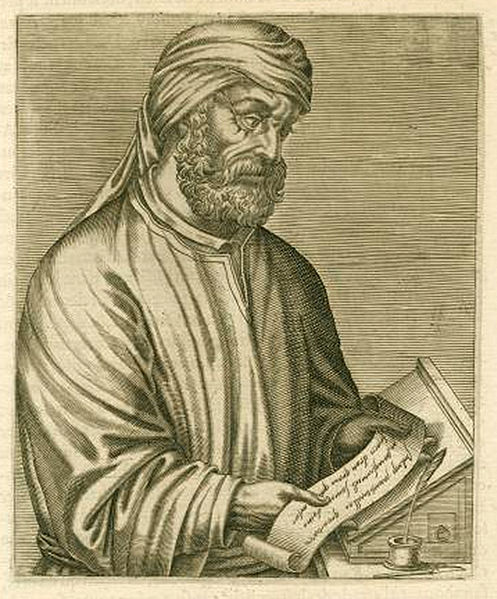 About 8 years ago now, I got called a “false teacher.” Yes, that still happens. A brother in Christ who barely knew me sat me down and told me that because I was allowing women to teach the Scriptures in the ministry I was leading, I would be held accountable for my false teaching.
Wow. The accusation was painful for me, and it sent me into a months-long quest to learn as much as possible about the theology around the topic of women in leadership. I read, studied, prayed, talked, debated and then read some more. And when I was done with that intense burst of learning, my reading of the Scriptures continued to lead me to the conviction that men and women are to be full partners together in ministry and, in particular, that women are to be free (better yet, empowered) to lead in the Kingdom according to their gifting.
But here’s the catch. When I emerged from this season of learning, I was militant. I mean, if you disagreed with me, I had no time for you. Looking back, I think the experience of being rebuked very nearly turned me into a rebuker! Pretty quickly, the issue of women in authority became a litmus test for me: if you agreed with me, we were cool. If you didn’t, we had problems.
Thankfully, God provoked a trusted mentor to challenge my posture. This guy sat me down one day and basically said, “Rob, I’m concerned that you’re headed toward becoming like that guy. You need to learn how to hold your convictions with humility.”
“Hold your convictions with humility.” That right there is a good word. Amen? Particularly when things are unclear or in dispute, we must be humble. Still further, we must remember that even if we disagree about something important, in the Kingdom we still called to fellowship together in the Lord, understanding that we have far more in common with a brother or sister than we have in dispute.
It’s in the spirit of that last statement that I want to introduce a new category on the blog, called “Throwing Tertullian a Bone.” You see, while it’s true that Tertullian had some really bad things to say about women, he also had a lot of great things to say about what it is to pursue Jesus. Don’t get me wrong; I’ll still throw him under the bus from time to time. And yet in the next keystroke, I’ll remind myself and my readers that though we may disagree on one thing, the reality is we agree about far more.
So, enjoy this quote from Tertullian. This is quoted by Josiah Hotchkiss Gilbert in his 1895 Dictionary of Burning Words of Brilliant Writers:
We worship unity in trinity, and trinity in unity; neither confounding the person nor dividing the substance. There is one person of the Father, another of the Son, and another of the Holy Ghost; but the Godhead of the Father, and of the Son, and of the Holy Ghost, is all one; the glory equal, the majesty co-eternal.
Pretty good, eh?
 Challenging Tertullian