What’s the Opposite of Subtle?
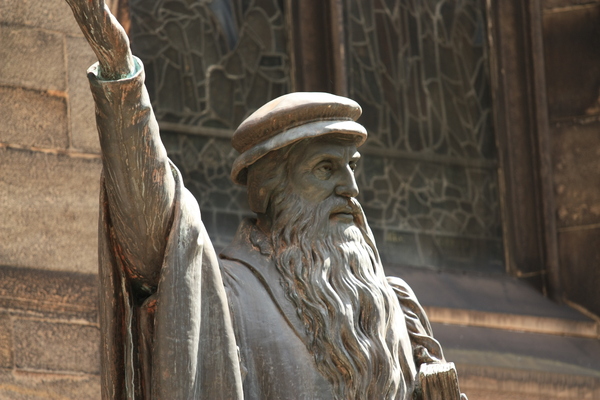
While driving south on the 99 this morning, I noticed Tertullian.
Yep, right there by the side of the road:

Grr.
Go Dr. Mirzakhani!
 For those us with a built-in, inexplicable bias that somehow men are better at math than women…
Think again.
For the first time in history, a woman has become the recipient of the Fields Medal, the top award in the field. It’s the mathematical equivalent of the Nobel Prize. Or an Oscar. Or the Wimbledon trophy.
Her name is Dr. Maryam Mirzakhani and she’s the first woman to win the Fields Medal since it was introduced in 1936. Awarded every 4 years to the world’s top mathematicians, 52 men have previously gone home with the award since it’s inception.
You might be wondering what she did to win the prize?
“What Maryam discovered is that in another regime, the dynamical orbits are tightly constrained to follow algebraic laws,” said Curtis T. McMullen, a professor at Harvard who was Dr. Mirzakhani’s doctoral adviser. “These dynamical systems describe surfaces with many handles, like pretzels, whose shape is evolving over time by twisting and stretching in a precise way. They are related to billiards on tables that are not rectangular but still polygonal, like the regular octagon.”
Simple. You know, “like pretzels…”
Here’s what Ingrid Daubechies, president of the International Mathematical Union, had to say about the historic first:
“All researchers in mathematics will tell you that there is no difference between the math done by a woman or a man, and of course the decision of the Fields Medal committee is based only on the results of each candidate,” she wrote. “That said, I bet the vast majority of the mathematicians in the world will be happy that it will no longer be possible to say that ‘the Fields Medal has always been awarded only to men.’ ”
As for Dr. Mirzakhani herself, here was her take:
“This is a great honor. I will be happy if it encourages young female scientists and mathematicians,” Dr. Mirzakhani was quoted as saying in a Stanford news release on Tuesday. “I am sure there will be many more women winning this kind of award in coming years.”
May it be so. And as for the myth that men are better at math than girls?
Thanks to Dr. Mirzakhani…
It just doesn’t add up.
Finally, a Driscoll Post
 Over the last two years, as I’ve been blogging at Challenging Tertullian, I’ve started but not finished a number of posts about Mark Driscoll.
Now, if you’re reading this, chances are you have heard of Mr. Driscoll. Megachurch pastor, best-selling (sort of, not really, never was) author, public face (along with several other pastors around the country) of a new, more muscular brand of evangelicalism.
And, most relevant to me, rhetorical firebrand when it comes to issues of faith and gender.
Mark Driscoll is currently under fire. Just the other day, Lifeway Bookstores announced that they would no longer carry Driscoll’s writings. And last week, Acts 29, a church planting consortium founded by Driscoll, cut ties with the pastor, in hopes that “the name of Christ will not continue to be dishonored.” Let me say that while I laud the move, I wish Acts 29 had attributed their decision specifically to Driscoll’s history of vitriolic words about women.
Before I continue, it is worth noting that Mark Driscoll has apologized, saying, “I was wrong to respond to people the way I did, using the language I used, and I am sorry for it and remain embarrassed by it.” It is also worth remembering that Mark Driscoll is a person and while we can and should challenge his words and actions, we ought not sin against him.
When I’ve started but not finished posts about Mark Driscoll, they have for the most part fallen into one of two categories.
When I’m particularly steamed at something that Driscoll has said or done, I’m tempted to rant about how he represents everything that’s wrong with modern-day evangelicalism. Once, when he described men who drive mini-vans as “mini-men,” I took one look in my garage, confirmed that, indeed, I drive a 2004 Chrysler Town & Country, and dreamt up the title of “Hey Mark Driscoll, Let’s Not Talk About Your ‘Mini-Man.'”
Not proud of that one.
OK, maybe a little…
Alternatively, there have been seasons where I’ve felt a degree of compassion, or perhaps pity, for Mark Driscoll. As in, maybe he hasn’t had, or hasn’t taken, opportunities to grow in his understanding of gender issues. Maybe he’s on a journey and we just need to nudge (or shove) him along. In fact, sometimes, it’s caused me to reflect with gratitude on my own journey. Once I cooked up a post entitled “I Could be Mark Driscoll.” It was sort of a “there but by the grace of God go I” piece.
This time, I think I’m ready to finish and post. Why? Because I think I now know where I stand on Mark Driscoll:
I think, more than anything else, that Mark Driscoll and his comments about women make the point that we must be vigilant and persistent with this conversation about male privilege in the church.
After all, some 1,800 years have passed between when Tertullian wrote this:
“You are the Devil’s gateway; you are the unsealer of that tree; you are the first foresaker of the divine law; you are the one who persuaded him whom the Devil was not brave enough to approach; you so lightly crushed the image of God, the man Adam.”
And when Driscoll wrote this, to a woman on an online discussion board:
“I speak harshly because I speak to men. A woman might not understand that. I also do not answer to women. So your questions will be ignored. I would however, recommend to you a few verses to memorize: I Timothy 2:11-15 I Corinthians 14:33-35.To learn them, ask your father or husband. If you have neither, ask your pastor. If she is a female, find another church. If you are the pastor, quit your job and repent.”
In my first post, I commented that statements like these represent “a school of thought of which Tertullian was one pupil. And here’s the thing, if you ask me, that school was in session before Tertullian, and, significantly, we’re all enrolled in it today.”
So when it comes to Mark Driscoll, here’s what’s troubling for me:
Because of his reach and influence, Driscoll is teaching in a very large classroom.
Male Privilege in the Church
 Last week my friends over at the Junia Project posted 10 ways that male privilege manifests itself in the church. The entire post is here, and here’s the bullet-pointed list:
1. A person’s male privilege is reflected the second he wonders why people are still talking about gender.
2. Male privilege means never having your intelligence or qualifications questioned because of your gender.
3. If you apply for a pastoral staff job, you can be sure your gender won’t be an issue.
4. If you perform the same task as a woman, chances are people will think you did a better job even if the outcomes were the same.
5. The governing boards of your church and denomination will be composed mostly of people of your same gender.
6. As a man, you are more likely to be trusted with responsibilities, even if you are new to the church.
7. When you attend church meetings you can be emotional or assertive without being thought of in a negative light.
8. Biblical characters of your own gender will be featured as primary subjects and as positive examples 90% of the time in the educational curriculum.
9. You can be confident that the language used in all aspects of corporate worship will always include you.
10. God will be pictured as male and described in masculine terms 90% of the time.
I think this list is spot-on, and I’d just like to add three more:
11. You get paid more than the woman who holds your same job at the church down the block. After all, there’s a wage gap, both in the culture and in the church.
12. You won’t be scrutinized over what you decide to wear. OK, as a guy you might get Fashion Police treatment if you go really wild with the outfit, but, for the most part, men get a pass while women get the critique.
13. When you speak, people will listen closer. And, as a man, you’ll get better eye contact, people will sit straighter, minds will wander less, etc. In general, to be a man in the church (or in the larger culture) is to automatically be given respect in communication.
What about you? Can you think of other examples?
If Only…
Awhile back, before I got subsumed into this powerful DMiss book eddy, I read Jimmy Carter’s latest book, entitled A Call to Action. It’s a book about the too-often-violent nexus of religion, power and the plight of women in the world. I’ve previously featured quotes from Carter here, here and, most recently, here.
As a follow-up to last Thursday’s post, I thought I would share another compelling and insightful quote:
“Violence against women remains one of the greatest ills of our time. It is shameful that for many women and girls walking in the streets, relaxing in parks, going to work, or even staying at home can become a brutal experience. When women and girls feel unsafe, half of humanity is unsafe. Violence against women and girls is perpetuated by centuries of male dominance and gender-based discrimination. But the roles that have traditionally been assigned to men and women in society are a human construct–there is nothing divine about them. Religious leaders have a responsibility to address these historic injustices. Respect for human dignity should not be dependent on whether one is a male or a female.”
In the spirit of Carter’s words, I want to share the following video. Thanks to a friend for sending it my way. May it be so that, increasingly, the religious among us take the lead in protecting, honoring and empowering women around the world.
People Watching
 They say airports are good for people watching.
Unfortunately, sometimes, when you watch people, you watch them mistreat others.
Case in point. At the San Jose, Costa Rica airport the other day, I was watching an airport employee doing his job. He was a baggage handler, and his job was to lug suitcases onto the conveyer built to begin their journeys into some aircraft’s underbelly.
So I was watching him and, all of a sudden, his eyes locked onto something. Or, more precisely, to someone. Because passing in front of this guy was a woman, another airline employee. She was walking from one station to the other, but she was not doing so unnoticed.
Because baggage guy’s eyes had a radar lock on her. As she was walking toward him, he was examining her chest. And, when she passed by, he took a good, long look at her rear. And it seemed like she had no idea.
I wish this was an isolated event, but of course it’s not. Sadly, my personal experience tells me it isn’t. And, in a vivid and eloquent way, so does the writer of this post over at Katie and the Real House. Here’s an excerpt from her post:
As I walked to my car after work, I was on edge. My heart was racing just a little bit and I felt agitated. I love my work and I’m usually happy and peaceful when I leave, so these feelings were baffling. Then I realized. PBR McStinkyshirt had done this to me.
Even though I was working, even though I was clearly about 40 years younger than him, even though I was certainly not displaying any feelings toward him other than employee-like hospitality, this man decided that none of those things mattered. He decided that his interest in me entitled him to interrupt my work and aim his creepiness at me, whether I wanted it or not.
I am still shaken and annoyed (mostly annoyed because ewww, you nasty man, you really messed up what was supposed to be a fun morning at work) when I think about this day. I am very, very (very!) tired of men and their ogling. I am tired of stares that last way longer than they need to. I am tired of words that make my stomach knot up, of men standing closer than they should, of having to keep my eyes straight ahead so I don’t appear to be inviting attention.
There are some charming humans who will say that the attention from these men is harmless (he was just looking!) or that it’s because of the way I was dressed (maybe I was asking for it) or that it’s because of the way that I look (you have to get used to that, Katie, it’s just because you’re pretty) but all of that is, as the French say, le bullshit. The implication is that it’s not a man’s fault when he does oglethings, that his hormones or a little pointy-eared devil on his shoulder or Rambo make him incapable of behaving in a civilized manner. Women are supposed to be cool with all kinds of unwanted attention because the men just can’t help themselves. They’re only men and besides, it’s all in good fun.
Guess what, guys. It’s not fun and it’s not good. Every time your eyes rest on a woman for more than a few seconds, you’ve gone too far. You’ve made her uncomfortable because you’ve barged your way into her life uninvited. Every time you hoot and holler on the street because you like the way she walks, or speed up in your car to get a better look, or do the sleazy “Goooood morning,” as you pass her in the hallway and stare at her chest, you’re forcing a little bit of yourself onto her without her permission and when it’s over, you take a little bit of her away with you.
Looking back to that experience in the airport, I wish I had gotten that guy’s attention and given him a shake of the head or maybe a finger wag. Because who else is going to stop him from doing that?
Only those people watching in the airport.
Want to read some edifying reflections on our time in Costa Rica? Go here to experience the trip along with us!
On Really Respecting Someone (re-post)
Note: As you read this, I’m in Costa Rica leading a team of college students on a 2 week service project. So enjoy this flashback post; it’s the #1 most shared post of all time on Challenging Tertullian.
 In case you missed it, and I’m not sure how you could have, yesterday was the Super Bowl. Every year the Super Bowl is a lot of things: championship football game, excuse to throw a big party, must-see commercial watching, a great time to shop in normally busy stores, etc.
Unfortunately, the Super Bowl also represents an annual crescendo in our culture’s habitual exploitation of women.
The folks behind the A21 Campaign are dedicated to abolishing sex trafficking and human slavery in the 21st century, and according to their website, the Super Bowl is “the single largest human trafficking incident in the United States.” Indeed, according to this Christian Post article, the 2010 Super Bowl saw an estimated 10,000 sex workers brought into Miami ahead of Super Bowl XLIV.
Sadly, in this the Super Bowl is not alone. I recently saw this report that describes how prostitutes in Brazil are taking English classes ahead of the 2014 soccer World Cup, in order to be able to service the clientele arriving for the tournament.
Clearly, we have a problem when the world’s greatest sporting events are linked with the exploitation of women though prostitution and sex trafficking.
But it’s not just prostitution that makes the Super Bowl so tragic in this regard. It’s also those famous commercials. You know, the ones where the women dress in skimpy frocks to essentially serve as the object of male desire. Yesterday, the people behind the Miss Representation film encouraged twitter users to call out sexism in the media by slapping the twitter hashtag #notbuyingit on on Super Bowl ads that they found to be offensive.
For instance:
Silly me, I thought women could be sexy and smart. Oh wait, they can!@GoDaddy, change all your ads to respect women or I’m #notbuyingit
Really disappointed with your Super Bowl ad, @CarlsJr. Please try to sell your burgers without selling out women and girls. #notbuyingit
Whether it’s through pornography, prostitution or the more subtle influence of advertising, the objectification of women is endemic in our culture, and it’s a key way that male privilege is propagated. Heck, while I’m at it, how these ads depict men isn’t so great either!
In John 8, Jesus faced a situation where a woman was being exploited. And I mean really exploited. The kind of exploitation that involves having her sexual sin publicly exposed in order to serve as a pawn in someone’s personal vendetta. Here’s the story:
2 At dawn he appeared again in the temple courts, where all the people gathered around him, and he sat down to teach them. 3 The teachers of the law and the Pharisees brought in a woman caught in adultery. They made her stand before the group 4 and said to Jesus, “Teacher, this woman was caught in the act of adultery. 5 In the Law Moses commanded us to stone such women. Now what do you say?” 6 They were using this question as a trap, in order to have a basis for accusing him.
But Jesus bent down and started to write on the ground with his finger.7 When they kept on questioning him, he straightened up and said to them, “Let any one of you who is without sin be the first to throw a stone at her.”8 Again he stooped down and wrote on the ground.
9 At this, those who heard began to go away one at a time, the older ones first, until only Jesus was left, with the woman still standing there. 10 Jesus straightened up and asked her, “Woman,where are they? Has no one condemned you?”
11 “No one, sir,” she said.
“Then neither do I condemn you,” Jesus declared. “Go now and leave your life of sin.”
Don’t you just love how Jesus turns this situation on its head?
The accusers become indicted. The accused becomes pardoned. The objectified becomes free.
It’s beautiful, isn’t it? When we talk about how Jesus treated women in his day, we have to talk about how he respected them, how he resisted allowing them to become objects, and how he defended their honor and removed their shame.
May it be so with us.
What about you? What did you think about the Super Bowl commercials?
This Stuff Matters (re-post)
Note: As you read this, I’m in Costa Rica leading a team of college students on a 2 week service project. So enjoy this flashback post; it’s the #2 most shared post of all time on Challenging Tertullian.
 This week, Tertullian and I are taking our show on the road. Together with a good friend and co-worker, I’m teaching a week long seminar on the topic of “Women in the Bible.” 14 college students will be taking the plunge with us.
So this week we’ll be opening the Scriptures, watching some videos and reading some articles. Along the way we’ll have some intense conversations I’m sure. All with the goal of helping these students think through what the Bible has to say about women in general, and the relationship between men and women in particular.
Last night we started by having a time to articulate our questions. And after listening to their questions, let there be no doubt:
This stuff matters.
Here’s the list of the questions that our students are bringing into the seminar this week:
Is there a hierarchy of gender in God’s eyes?
Why are men represented more than women in the Bible?
What exactly are the roles that each gender has in the church, in ministry and in the home?
Why is there God the Father only, if both men and women are made in God’s image?
How do men and women work together peacefully?
What are some common problems between men and women in ministry?
How do we figure out what is from God and what is influenced by culture?
Why don’t churches discuss this topic?
Simple, huh? Now to seek some answers! If you’re the praying type, we’d appreciate them! And I’ll give an update in the Thursday post.
Tour de Kabul (re-post)
Note: As you read this, I’m in Costa Rica leading a team of college students on a 2 week service project. So enjoy this flashback post; it’s the #3 most shared post of all time on Challenging Tertullian.
 Afghanistan is not an easy place to be a woman.
Indeed, though the situation is changing as the nation emerges from the Taliban era, today only 15% of women in Afghanistan are literate and only 37% of the nation’s grade school students are girls. Further, patriarchy is entrenched by laws that dictate that husbands can divorce their wives without her voice being heard and, of course, the cultural practice of women wearing burqas when out in public. To put it mildly:
Male privilege dominates Afghan culture.
Which makes the story of the Afghan women’s national cycling team all the more incredible. Enjoy the the story, excerpted from this article:
Challenging the long- held cultural belief that a woman cycling is offensive, these dedicated young athletes are standing up to social norms and becoming vehicles of change.
“Daily in Afghanistan, girls risk their lives to go to school, women risk their lives to work in government, the police forces, and even the army. Women activists march in the streets to fight for their rights, knowing that they are making themselves targets,” says Shannon Galpin, currently producing a documentary film about the team. “The women cyclists are doing something very simple that we take for granted, but making a huge statement in a country that doesn’t allow their women to ride bikes.”
In Afghanistan, it is very rare to see a woman on a bike other than sitting sidesaddle behind a man. According to Mountain2Mountain, there are currently only about 60 to 70 women cyclists in the entire country. However, the newly created women’s team has around 12 members who are passionate about their sport and about changing the lives of women in their country.
Currently, the women on the team train once a week, due to safety concerns. Riding at the risk of their own lives, members of the team train in the back roads and highways outside Kabul. They ride borrowed, donated, and scrapped-together road and sport bikes. Their gear is mostly donated. Their lone sponsor helps pay for their jerseys. Despite opposition and social taboo, however, these women ride their bicycles as a statement of freedom.
In 1896, Susan B. Anthony, iconic American reformer said: ““The bicycle has done more to emancipate women than anything else in the world. It gives a woman a feeling of freedom and self-reliance. The moment she takes her seat she knows she can’t get into harm unless she gets off her bicycle, and away she goes, the picture of free, untrammeled womanhood.”
Thankfully, step by step, this vision is becoming true in today’s Afghanistan.
In an NBC News piece here Shannon Galpin is quoted as saying: “If they are willing to take the risk, then the least we can do is support them.”Indeed. Let’s celebrate their story, and if you’d like to contribute to the cause you can do so here and here.
A Tale of Two Brands
 Chances are you’ve seen the “Like a Girl” Always ad somewhere.
I think it’s magically appeared maybe 10 times on my Facebook wall recently.
In case you haven’t seen it, the ad is an attempt by the company Always to help us think about what we mean when we say someone does something “like a girl.” It starts with adults offering sad and cliched impressions of throwing, running, etc. “like a girl,” before young girls come on the screen and do the same things…normally. Naturally. Like a girl.
What’s the point?
That somewhere along the way, culture convinces us that being “like a girl” is a bad thing. And that’s tragic.
As you might expect, it’s a convicting piece. To see the ad, and a brief article describing it, go here.
Among other things, for me the ad raises an interesting question. When does male privilege really kick in? Because one of the messages of the ad is that early on girls are not negatively impacted by the phrase “like a girl.” Indeed, for the first part of a girl’s life, it’s an empowering thing to be that way.
So when does that change? Junior high? High school? Different for everyone? It would be an interesting study. Perhaps for a post-doc…
The other thing that intrigues me is the giant corporation behind the proverbial curtain. Who would it be producing this ad? Always, sure. But who’s behind that brand?
Proctor & Gamble.
That’s right, Always is a member of the Proctor & Gamble stable of brands. Challenging Tertullian readers might remember Proctor & Gamble because they’ve been featured on these pages before, and not in a good way.
P&G is the company behind last Winter’s Old Spice “momsong” commercial, an ad campaign that essentially distilled manhood down to “having fun with women and misbehaving.” Commenting about this ad back in January, I wrote:
Reducing “manhood” down to merely the carnal instinct to chase women, especially with the connotation of inappropriateness, doesn’t serve anyone, male or female. Not only does it neglect every other aspect of what it means to be a man, it also perpetuates the man as hunter/woman as quarry narrative, one that too easily and often becomes toxic.
So, two ads from the same conglomerate. And yet two radically different, indeed diametrically opposite messages: one empowers women and the other perpetuates the problem of privilege.
What to make of that?
On one hand, we have to acknowledge the profit motive. To be sure, Always and Old Spice are trying to make money, and the different ads reflect each company’s target demographics. I think the “Like a Girl” campaign is excellent, but I know that at the end of the day it’s still about the bottom line.
But on the other hand, maybe there’s a bit of a parable or metaphor here. After all, aren’t we all simultaneously broken and redeemed? Don’t we all get it right one minute and blow it the next? Speaking personally, when it comes to dealing with male privilege, I know I do (examples here and here).
It would be much easier if people (or companies) were good or bad, one or the other. Instead, we live in shades of gray. Sometimes we’re Always and sometimes we’re Old Spice.
I’m reminded of the Apostle Paul’s words to the church in Rome, in Romans 7:18-20:
“I want to do what is right, but I can’t. I want to do what is good, but I don’t. I don’t want to do what is wrong, but I do it anyway. But if I do what I don’t want to do, I am not really the one doing wrong; it is sin living in me that does it.”
Ever feel like that?
So what do we do with this? For one thing, we acknowledge reality. We’ll get it right sometimes and other times our brokenness will get in the way. On this journey toward a male privilege-free and gender-equal church we must give ourselves and others some grace.
At the same time, we must continue working. We have to challenge ourselves to continue to grow, to mature, to develop.
To become more like Always and less like Old Spice.
 Challenging Tertullian