“You Just Keep Moving Forward”
 When I think of the biggest male-dominated professions, I think of airline pilots, mechanics and people in the helping professions, like police and fire personnel. Oh, and then there’s construction, tech, finance, politics and, yep, pastors.
Come to think of it, it’s sort of tough to narrow down.
So I paid attention the other day when I saw this NPR article about a woman named Judy Brewer. In 1974, the Arlington County, VA Fire Department made Miller the first female career firefighter in the nation.
And as you might expect, Brewer faced more than her share of pushback. For instance, according to Brewer:
“‘The wives were upset about their husbands bunking with a woman,’’’ Brewer recalled in an article in the Dec. 25, 1990 edition of The Washington Post.`I’m still here, so obviously the concern died down eventually.’’
It wasn’t just her co-worker’s wives. Again, according to Brewer:
“When I applied at my local fire station to volunteer in Fairfax County, I was told essentially to go back to my kitchen, it was no place for a woman,” she says. Fellow churchgoers asked how she could “lower” herself to do that kind of job. Brewer’s fellow firefighters weren’t accepting, either. “When I first was hired, people were worried about different things,” she says. “The one that they used as a reason was that they were afraid that I would compromise them in a fire by not being able to help them if they got into trouble.”
So how did she persevere in the midst of this climate?
“…you just keep saying, OK, I’m doing a lot of good. And you just keep moving forward,” she says.
Friends, that’s self-confidence. It’s also perseverance.
In the end, Brewer thrived. She saved lives. She inspired (and continues to inspire) other women to serve. And she did the job well. In fact, in 1999, Brewer retired…as a battalion chief. Yep, she was the first woman to attain that leadership role in the country as well.
So here’s to Judy Brewer. Thanks for leading the way, and for continuing to “just move forward.”
Katniss, Tris and…Lucy Dixon
 I really need Veronica Roth to hurry up.
In case you aren’t up on your dystopian young adult literary trilogies, Veronica Roth is the author of the Divergent series, and the reason I need her to hurry up is because the books are amazing and she’s only 2/3rds of the way done!
In Roth’s world, society is divided up into five factions, delineated by a particular virtue. So, there’s Amity (the kind), Erudite (the intellectual), Abnegation (the humble), Candor (the truthful) and Dauntless (the brave). Toss in a bit of violence, some impossible moral choices, and, of course, a wee bit o’ teenage romantic angst, and you have the makings of a really entertaining read.
Like its dystopian twin, The Hunger Games, Divergent has a young woman as the main character and heroine. And as with The Hunger Games‘ Katniss, Divergent‘s Tris weathers a slew of trials, both external and, more significantly, internal on her way to surviving her situation. To be sure Katniss and Tris are complex characters and yet in the end, Tris emerges, as Katniss did, with perhaps the most precious of commodities:
Self-confidence.
And this begs the question: why do you think these young adult authors are casting young women as their heroines?
Could it be because young girls/women in our culture need a confidence boost? Could it be that in a world dominated by male privilege, our young women need to know that they have power? That they can choose their destinies? That they are more than able to fend for themselves, thank you very much?
Needless to say, strong, confident, even violent female leads are not the norm in our culture’s epic stories. In this article, sociologist Kathryn Gilpatric diagnoses the situation:
“This research provides evidence that the majority of female action characters shown in American cinema are not empowering images, they do not draw on their femininity as a sources of power, and they are not a kind of ‘post woman’ operating outside the boundaries of gender restrictions.”
In short, they’re not Katniss, or Tris. They’re not confident.
In our house, we are focused on raising three strong and confident women. Of course we want more than just “strong and confident,” and we’ll need to help them learn how to relate in healthy ways with the men around them, but a dose of Katniss or Tris would be fine with us as well.
Today we cleaned out the living room, and in a box of papers from last school year, I found our daughter Lucy’s “Alamanak,” and specifically the “Sports Rap” page. Yes, we’re raising an artist.
One of the things I noticed was how Lucy is talking about boys. In true Katniss/Tris spirit, right now she doesn’t need any boys!
After all, they’re just “wacky:”

This Quote Royally Stinks
 OK, first, the obligatory best wishes:
Amy and I would like to congratulate Prince William and Catherine, the Duchess of Cambridge, on the arrival of Prince George Alexander Louis, third in the line to the British throne. We wish the happy family nothing but the best as they enjoy their newborn and each of his royal poops.
Seriously–and I know I’ve blogged about this before–I don’t get the American obsession with the British monarchy. After all, long ago we dumped the English on their royal arses, didn’t we?!?
And so I’ve scratched my head this week at the overwhelming coverage of the royal birth. Unless you’ve been in a cave for the week, you’ve seen the coverage on the morning shows, the evening news, on the web and everywhere in between. It’s royal baby mania.
And then I about scratched my head off completely when I read the following quote from CNN royal commentator Victoria Arbiter:
“I can’t believe we finally, after all this waiting, know that we have a boy,” she said shortly after the birth was announced. “My first thought, I have to say, was this is how brilliant a royal Kate is. There are women throughout British royal family history that have panicked over not being able to deliver a boy. And here we are — Kate did it first time.”
Now, there are asinine quotes, and then there’s this one.
For one thing, I have no idea how having a boy was in any way Kate’s decision. I mean, the quote reads as if she willed it and it was so. And, by contrast, other royals have not had that same super-power and hence they’ve panicked. Last time I checked, outside of some serious science, there’s not a whole lot a mom-to-be can do to pick a baby’s gender, old wive’s tales by damned.
Secondly, and most vexing, is the quote’s juxtaposition of “brilliant” with “able to deliver a boy.”
As I reported when Kate announced her pregnancy, the British law of primogeniture (male heirs accede to the throne, even in the presence of older sisters) was happily expunged by Parliament in the run-up to this royal birth. Still, the perception persists, at least on the part of Ms. Arbiter, that because the baby was born with a y chromosome, it’s better for the baby, for Kate and for the nation.
If she’s “brilliant” for bearing a boy, what would she be if she had born a girl?
In the end, it’s a ridiculous quote, one that’s easy to dismiss out of hand. In this article on slate, one writer gives this comment “the award for worst royal baby commentary ever.”
Indeed that’s so. But it’s also more than that.
It also wins the Tertullian Award for most egregious male privilege quote of the year.
Amos and Dubai
 I really like the prophet Amos.
After all, the brother authored a powerful book, full of vivid, poetic imagery and compelling teaching featuring a strong call to justice and righteousness.
On the other hand, I “like” the prophet Amos in the same way I “like” a trip to the dentist. Or a performance review. Or someone sitting me down and setting me straight.
What I mean is that it’s not always easy to have our experiences or our perspectives challenged.
And in Amos’ case, the challenge is about injustice and false spirituality. For me the central message of Amos is that God cannot abide injustice and so God’s going to do something about it. As humans, then, the right move is to whole-heartedly join God in that pursuit. To not be on the side of justice is, well, akin to the ironic horror of “a man [escaping] from a lion only to meet a bear.”
See what I mean? Amos is a handful.
One particular hotbed of injustice in the book of Amos is the city gate. In Amos’ day, the gate was the hub of civic life. If you had judicial business, you went to the gate. If you needed the marketplace, you hit up a vendor at the gate. If you wanted to debate the issues of the day, forget an early morning at your local Panera and instead go to the gate.
As one commentator puts it, “when the Bible talks of the ‘gate’ it may mean: the ‘market’, the ‘law court’ (either formally in criminal cases or less formally as the place where family business or disputes were settled), the public forum where community business was discussed and gossip exchanged or the administrative center – the ‘Town Hall’.”
Basically, the gate is where you took the pulse of the city, for good or for ill.
In the spirit of Amos, I want to call out some injustice right now at the global gate. Specifically, in the cosmopolitan yet socially traditional country of Dubai.
According to this article, over four months ago, Norwegian woman Marte Deborah Dalelv was sexually assaulted while on business in Dubai. After a court process, her attacker was sentenced, but only to a 13-month sentence for sex outside of marriage and alcohol consumption. I daresay that sentence feels too lenient for the caliber of the crime.
But then it gets worse.
Because Dalelv was ALSO sentenced. To 16 months. For the same two crimes with perjury added in. Simply put, the Dubai court didn’t believe her.
Why not?
It could be because Dubai’s legal standard for what constitutes sexual assault is steeped in male privilege. One London-based group is calling on Dubai, and the United Arab Emirates to which the country belongs, to overturn the decision, with the following rationale:
It said the UAE’s claims that it is attempting to end discrimination against women was undermined by a legal system that “prohibits the achievement of justice for cases of sexual violence against women”. According to the Emirates Centre for Human Rights, UAE law states a rape conviction can only be secured after a confession or as the result of testimony from four adult male witnesses to the crime.
An outright confession, or the testimony of four adult male witnesses? Really? That threshold for proof is just not good enough. It’s too high. Ultimately, it’s unjust to the violated woman.
And so in this case and too many more around the world, we join the prophet–we join the Lord–in yearning for a day when justice is established at the city gate. From Amos 5:21-24:
“I hate, I despise your religious festivals;
your assemblies are a stench to me.
Even though you bring me burnt offerings and grain offerings,
I will not accept them.
Though you bring choice fellowship offerings,
I will have no regard for them.
Away with the noise of your songs!
I will not listen to the music of your harps.
But let justice roll on like a river,
righteousness like a never-failing stream!”
UPDATE: I know I’m good but not this good! About 10 minutes after I posted this, I read on the front page of cnn.com that Dalelv had been pardoned (here). She can now go home to heal. Great news for her, and yet the fact remains that the U.A.E. laws need to change!
Other People’s Shoes
 No doubt you’ve heard the ol’ adage “walk a mile in someone else’s shoes.”
It captures the idea that you can’t understand someone until you’ve experienced what they experience.
This notion became clear for me in college when I read the book Black Like Me by John Howard Griffin. Published in 1961, Black Like Me describes how Griffin, a white journalist, transformed himself into a southern black man in order to, well, walk a mile in someone else’s shoes.
Here’s Griffin’s summation of his experience:
“Nothing can describe the withering horror of this. You feel lost, sick at heart before such unmasked hatred, not so much because it threatens you as because it shows humans in such an inhuman light. You see a kind of insanity, something so obscene the very obscenity of it (rather than its threat) terrifies you. It was so new I could not take my eyes from the man’s face. I felt like saying: “What in God’s name are you doing to yourself?”
Sometimes, other people’s shoes are painful.
Meet Kim O’Grady. Believe it or not, Kim O’Grady actually walked a mile…in his own shoes. Sort of.
This article tells O’Grady’s story of coming to grips with male privilege. Here’s the tale:
In a Tumblr post titled “How I Discovered Gender Discrimination,” O’Grady shared his story of job-hunting in the male-dominated fields of engineering and management in the late ’90s. Despite his impressive resume and relevant work experience, he was not offered a single interview — until he clarified his gender on his CV (curriculum vitae). O’Grady wrote:
“My first name is Kim. Technically it’s gender neutral but my experience showed that most people’s default setting in the absence of any other clues is to assume Kim is a women’s name. And nothing else on my CV identified me as male. At first I thought I was being a little paranoid but engineering, trades, sales and management were all definitely male-dominated industries. So I pictured all the managers I had over the years and, forming an amalgam of them in my mind, I read through the document as I imagined they would have. It was like being hit on the head with a big sheet of unbreakable glass ceiling.”
After tweaking his resume, O’Grady noticed how quickly his job “luck” changed. “I got an interview for the very next job I applied for. And the one after that,” he wrote. “In the end I beat out a very competitive short-list and enjoyed that job for the next few years, further enhancing my career.” Male privilege — it’s a real thing.
The Case for Women
 I think there are plenty of reasons to overturn the system of male privilege. Recently, the New York Times focused on one in particular:
Economics.
In his article “The Case for Women,” economist and M.I.T. professor Simon Johnson examines a recent speech by Heidi Crebo-Rediker, the chief economist at the U.S. State Department, in which Crebo-Rediker called for the International Monetary Fund to recognize and validate the economic importance of women as it works with member nations.
There’s a lot to like about Johnson’s article. Here are three highlights:
1. This is truly a global issue. Johnson cites examples of how getting women more involved in fiscal matters will positively transform countries and regions ranging from United States to Japan to North Africa to southern Europe. Indeed, empowering women economically is a global solution to a global problem. Johnson writes, “the fund and other organizations should be encouraged to emphasize the importance of female opportunities, representation and participation for economic development around the world.”
2. In our country, empowering women should be on everyone’s political agenda. Interestingly, Johnson notes that before the 1960s, the Republican party was known was the party of women’s rights. Then, with the arrival of the feminist movement and its embrace by the Democrats, the parties essentially switched sides. If the United States is going to benefit in greater measure from the economic impact of women, we would do well to close what Johnson calls the “gender gap between Democrats and Republicans.” Women’s rights ought to transcend party lines.
3. There are hopeful signs of change at the top. Johnson concludes his piece on an upward note, for women are gaining power in some key seats of economic leadership. Currently, Janet Yellen serves as the vice chairwoman of the Federal Reserve, and there is a good chance that President Obama will appoint her to the top post. Then there’s Sheila Bair, former head of the FDIC, who according to Johnson would be an effective Secretary of the Treasury. Finally, Crebo-Rediker’s appeal will be heard by a woman, as Christine Legarde is the current leader of the IMF. As we move toward a greater empowerment of women at the ground level, it’s important that that move is accompanied by a similar trend at the leadership level.
So, why dismantle the system of privilege? The answer, at least in part, is so that the global economy can flourish as women find greater economic opportunities.
Want more? I’ve blogged previously about money and privilege here and here.
Double Fault
 Every summer, tennis players and fans gather together in London to play a little tennis tournament. You may have heard of it. It’s called Wimbledon.
I’d imagine that for a tennis player there are few things cooler than playing on the lawns of Wimbledon. Stefan Edberg, 6-time major winner and 2-time Wimbledon champ, captured the aura of the tournament when he said:
“For me, and most of the other players, too, if you had to pick one of the four Grand Slams, you would pick Wimbledon. It’s got tradition, it’s got atmosphere, and it’s got mystique.”
To play Wimbledon is one thing, to win it of course is another.
And winning Wimbledon is exactly what Frenchwoman Marion Bartoli did two weeks ago. The 28 year old, playing in her 11th Wimbledon, defeated German Sabine Lisicki to win the title. It was the biggest win of her career and her first major trophy. When you consider the years of effort, training and sacrifice, for Bartoli, it was a glorious day.
But that didn’t stop Tertullian from rearing his ugly head.
John Inverdale is a tennis commentator for the BBC. In the wake of Bartoli’s triumph, here’s what he had to say about the new champion:
“Do you think Bartoli’s dad told her when she was little ‘You’re never going to be a looker? You’ll never be a Sharapova, so you have to be scrappy and fight.'”
To Inverdale, I say this:
Shut it. Now.
The sad reality of a world marked by male privilege is that female athletes are judged on more than their athletic merits. In other words, too often, it’s about the clothes, the look, the fitness and the lifestyle. Marion Bartoli just won Wimbledon. Who cares what she looks like?!?
In this 2011 article, writer Mary Jo Kane summarizes the problem:
Study after study has revealed that newspaper and TV coverage around the globe routinely and systematically focuses on the athletic exploits of male athletes while offering hypersexualized images of their female counterparts. These findings are no trivial matter. Scholars have long argued that a major consequence of the media’s tendency to sexualize women’s athletic accomplishments is the reinforcement of their status as second-class citizens in one of the most powerful economic, social and political institutions on the planet. In doing so, media images that emphasize femininity/sexuality actually suppress interest in, not to mention respect for, women’s sports.
In the end, BBC and Inverdale apologized. That’s great.
Someday, we hope, apologies won’t be necessary.
The Way of the Cross
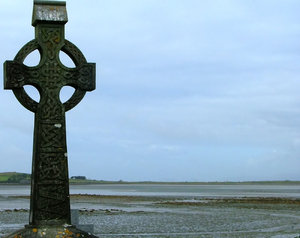 Following Jesus is a real trip.
What I mean is that a life with Jesus is a life lived upside down, utterly contrary to the standards of the world. In Jesus’ topsy turvy Kingdom, weakness is power, suffering is glory, shame is victory. In 1 Corinthians 1:26-31, Paul writes this:
“Remember, dear brothers and sisters, that few of you were wise in the world’s eyes or powerful or wealthy when God called you. 27 Instead, God chose things the world considers foolish in order to shame those who think they are wise. And he chose things that are powerless to shame those who are powerful. 28 God chose things despised by the world, things counted as nothing at all, and used them to bring to nothing what the world considers important. 29 As a result, no one can ever boast in the presence of God.” 30 God has united you with Christ Jesus. For our benefit God made him to be wisdom itself. Christ made us right with God; he made us pure and holy, and he freed us from sin. 31 Therefore, as the Scriptures say, “If you want to boast, boast only about the Lord.”
I don’t know about you, but when I think about the martyred icons of the church, about the Christians who lived this idea out to the extreme, I mostly think of the men.
From the book of Acts, there’s Stephen, stoned for his faith. Then Jesus’ apostles met grisly ends for the sake of their faith. It’s said that Peter was crucified upside down. Philip, Andrew, Simon, James? All martyred. Then, from the 2nd to the 4th centuries, we have the so-called “age of martyrs,” with prominent names like Polycarp, Origen, Ignatius of Antioch and, appropriately, Justin Martyr.
Heroes all. But what of the women?
I mean, sure, there’s 15th century Joan of Arc, but what do you have after that?
Today let me introduce you to a group of women who were martyred for their faith. This article here profiles 18 of these women, and it is a summary of a larger list of 170 known female martyrs profiled in the book Feminine Threads.
For now, meet Donata, from AD 180:
“One of 12 Christians from the African town of Scilita who were martyred at Carthage. When called upon to sacrifice, she replied, ‘We render to Caesar as Caesar, but worship and prayers to God alone.’”
And meet Felicitus, from AD 162:
“Roman lady who brought up her seven sons in the Christian faith. She was seized and called on to give up Christ to spare her family; but she remained faithful to Christ. Her sons too refused to sacrifice to the Emperor. They all were executed–Felicitas and her sons Januarius, Felix, Phillipus, Sylvanus, Alexander, Vitalis, and Martialis.”
Or meet Blandina, from AD 177:
“Female slave martyred at Lyons. Though the weakest of the martyrs that day, she showed the most courage. She was thrown to the wild beasts and finally gored to death by a bull.”
Friends, when it comes to the upside down Kingdom of God, there is no privilege. Women and men are both called to walk the way of the cross.
So today, let’s set the record straight. The history of our faith affirms the martyred faithfulness of both men and women.
Thank God for their lives, and may we live in ways that honor their sacrifices.
On Hitting 9 Months
 In his new book, Start, writer Jon Acuff calls us to live lives of purpose, adventure and, to use his term, awesomeness. To start such a journey, he says, don’t worry about the end, just start. He writes:
“It’s impossible to accurately predict the finish. Part of the reason it’s so difficult is that the path changes by the time we get to the end.”
“You just have to start.”
With this post, this blog hits the 9 month mark. That’s about 274 days of duking it out with Mr. Tertullian. And for me it really has been an exercise in just starting. I’m not sure where it will end, exactly, but I have realized a couple of things as I’ve been starting.
First, as I’ve posted before, it feels vulnerable to be putting this stuff out there. Just the other day, I got a Facebook message from a friend who clearly has a different perspective on this stuff. And while the tone of the exchange was more than civil, it still pressed my emotional buttons. For me, then, it’s vital to hold onto grace, grace for the process, for the learning mode I’m in, grace for others, and grace for myself.
Next, sometimes I worry that I’m being redundant, or a broken record. This is especially true when I launch one of those posts that bemoans the status quo. To my rescue comes a word like this one, from Ello’s World’s tumblr page, in a piece here about diversity in the publishing industry:
I was going to post this up on my blog and my daughter was like, you are talking about diversity again. Don’t you ever feel like you’re talking and nobody’s listening? Do you ever think it’s not worth it? And I was so sad to hear her say that. I told her “If you want change, you have to keep starting up the same conversation over and over because someone is always listening. And maybe some day, it will reach those someones who will go from just nodding their heads to wanting to do something about it. That’s why we must keep saying the same thing, no matter how tired we get.” And she said, “Post it.”
So far it’s been 9 months of “post it.” I hope you’re listening.
Lastly, the more I start, the longer the road ahead seems. I see Tertullian all over the place! As a preview of coming attractions, here are a few topics that I’m batting around in my head: the Bible and male privilege, gender differences: nature or nurture, and a bit more on the feminism movement. Stay tuned!
At the end of his book, Acuff expresses his dream for his readers:
“I hope you punched fear in the face. I hope you escaped average. I hope you figured out what your diamonds are and started doing work that matters. I hope you realized that the door to purpose has been unlocked this whole time. And when you survey your life and find something else that could be more awesome, I hope you’ll do what I’m going to do once I finish writing this sentence. Start again.”
Whenever Tertullian and I are done with this conversation, I plan to have done these things. For now, thanks for starting with me.
About the “F-Word”…
 Today Tertullian and I are talking about the dreaded “F-word:”
Feminism.
That’s the “F-word” you were thinking of, yes?
When it comes to labels, I have mixed feelings. You know, when someone says, “I’m a reformed theologian,” or, “well, so-and-so is a right-wing conservative,” or “yeah, Bill, he’s a post-evangelical, anti-establishment theocratic nihilist.”
Sorta helpful, sorta not.
On one hand, labels can be useful conversational tools. After all, it’s time-consuming to parse every person’s position on every issue in every conversation. In addition, identifying with a particular label can helpfully group individuals into tribes. And in these smaller groups, positions can be clarified and readied to engage with the larger community.
On the other hand, labels can be toxic. After all, as soon as you reduce someone down to a particular type of thinker, you can put them in your box and be done with them. Because, truth be known, all labels have baggage, and the great danger is misunderstanding someone based on your understanding of their label. Alternately, when someone self-identifies with a specific label, there’s the inherent risk that they will therefore not be open to engagement, unless you identify with the same label.
Too often labels put up walls, and walls limit dialogue.
All of this said, my goal with labels is to always seek to understand what is underneath someone’s given or chosen label. That way, I stand a better chance of remembering that there is a person behind their ideological position.
As a label, “feminism” certainly has baggage. And, let’s be honest, that’s particularly true in the church. In the church, as a movement and as an idea, by and large feminism has been vilified, marginalized and dismissed as a prime perpetrator of society’s evils.
For example, here’s a doozy from evangelical standard-bearer Pat Robertson in 2011:
“The feminist agenda is not about equal rights for women. It is about a socialist, anti-family political movement that encourages women to leave their husbands, kill their children, practice witchcraft, destroy capitalism and become lesbians.”
Extreme? Yes. Over the top? No doubt. Representative? Maybe. Because it’s not just Pat. It’s been awhile since the church and feminism have gotten along.
To be sure feminism has lots of stripes, offshoots and tribes. But what is feminism at its core? Take it from Gloria Steinem. Gloria Steinem is a feminist icon. In many ways, Steinem is responsible for defining the feminist movement. Here’s Steinem’s definition:
“A feminist is anyone who recognizes the equality and full humanity of women and men.”
Doesn’t that sound like something we should all endorse? Recently, I came across this article, where the author promotes the idea of “freedom feminism.” She writes:
Though the major battles for equality and opportunity in the United States have been fought and largely won, the work of feminism remains unfinished. Across the globe, fledgling women’s groups struggle to survive in the face of genuine and often violent oppression. In the West, popular culture contains strong elements of misogyny. Women, far more than men, struggle with the challenge of combining work and family. Despite women’s immense progress, poverty rolls are disproportionately filled with women with children.
Who needs feminism? We do. The world does. But an effective women’s movement needs to be rescued from its current outcast state. Anyone who cares about improving the status of women around the world should be working to create a women’s movement that resonates with women. A reality-based, male-respecting, judicious feminism could greatly help women both in the United States and throughout the world.
Perhaps it’s time to reclaim the F-word. Until we get to the point where power is equalized and privilege is shared, we need feminism and the conversations that go with it.
So, if you must label me, call me a feminist.
And then let’s talk about what that means to you and to me.
 Challenging Tertullian