Tears for Fears (and Hopes)
 Last week, I had the opportunity to teach on the topic of women in leadership to a roomful of saints at a church in Portland, OR. For me it is always a joyful privilege to challenge Christians to embrace an egalitarian understanding of the Scriptures.
It’s also a deeply personal experience, and I mean that in a couple of ways. On one hand, I’m on this journey of understanding both my male privilege and how men and women are meant to partner together in ministry. And teaching or training on that presses into what God is doing in and through me.
On the other hand, engaging around this topic hits me as a dad of three little girls. As I told the crowd last week, it matters to me a great deal what kind of a church these girls will eventually enter into. Will it be a church that is open to the gifts that God has sovereignly hard-wired into them, or will they face limits and barriers by virtue of their gender?
And so I’m desperate to help the church become the former.
A few years ago, our oldest daughter, Lucy, qualified for the fourth grade district finals in cross-country. It meant that she would compete against 120+ other girls in the big district race. As a runner, I was so excited for her to compete!
On the day of the race, I dropped her off at the start line and then went out to find a place to cheer her on, about halfway along the course. When I got to the perfect spot, I looked back toward the starting line, with my little girl somewhere in the masses, and…
I cried.
Or, more to the point, I bawled. Like uncontrollable sobbing. It caught me by complete surprise, and so I started to ask myself why I was in tears. I had two conflicting emotions going on inside of me that day.
First, I knew Lucy was about to suffer. I’ve done enough racing in my day to understand the pain you have to endure if you want to be successful in a running race. And so there was this empathetic, fatherly thing at work in me. No matter the context, it’s hard for this old “feeler” to watch our kids struggle, and I knew Lucy was destined for about 4 minutes of suffering.
Second, I had this fierce belief in Lucy welling up within me. It’s sort of hard to explain the emotion, but it felt like this intense conviction that Lucy could do this. Maybe it was some sort of vicarious or surrogate emotion, since I know she was full of self-doubt as she toed the start line.
When I think about our girls engaging a church context that I fear will be all too hostile to them using their leadership gifts, I feel these same two things. Simultaneously, I feel hope (“they can overcome!”) and fear (“they are going to suffer”).
And that’s one big reason why this stuff is personal for me.
Want to know the end of the story? Lucy finished 22nd that day, good enough to earn a district ribbon. Me?
I was crying the entire time.
State of Equality
Yesterday I had the pleasure of driving across the great state of Wyoming. If you’re a fan of endless miles of grasslands, punctuated intermittently with rivers, hills, and lovely rock outcroppings, that drive is for you.
Come to think of it, the 80 MPH speed limit helps too.
And then there’s the sky. It was glorious all day. Here’s a shot from out my window:

See? Amazing. And I know Wyoming’s neighbor to the north is nicknamed “Big Sky Country,” but clearly Montana doesn’t corner the market on that kind of beauty.
On the other hand, Wyoming has a pretty good nickname of its own. Turns out Wyoming is known as the “Equality State.” From the official state website:
Wyoming is also known as the “Equality State” because of the rights women have traditionally enjoyed here. Wyoming women were the first in the nation to vote, serve on juries and hold public office.
In 1869, Wyoming’s territorial legislature became the first government in the world to grant “female suffrage” by enacting a bill granting Wyoming women the right to vote. The act was signed into law on December 10 of that year by Governor A.J. Campbell.
Less than three months after the signing of that act, on February 17, 1870, the “Mother of Women Suffrage in Wyoming”-Ester Hobart Morris of South Pass City-became the first woman ever to be appointed a justice of the peace. Laramie was also the site for the first equal suffrage vote cast in the nation by a woman-Mrs. Louisa Swain on September 6, 1870.
In 1894, Estelle Reel (Mrs. Cort F. Meyer) became one of the first women in the United States elected to a state office, that of Wyoming State Superintendent of Public Instruction.
In 1924, Mrs. Nellie Tayloe Ross was the first elected woman governor to take office in the United States. She took office on January 5, 1925, 20 days before “Ma” Ferguson of Texas (elected on the same day) took office. Mrs. Ross went on to become the first woman to be appointed Director of the United States Mint-a position she held for 20 years, from 1933 to 1953. In 1991, women held three of the state’s five top elective positions and a total of 23 women hold seats in the Wyoming Legislature, three in the Senate and 20 in the House.
Good for you Wyoming. That’s a history to be proud of. Keep on challenging Tertullian, Equality State!
GO Canada!
 Have I mentioned that I’m on sabbatical?!? It’s true. On June 5, I started a 6-month ministry sabbatical. The focus? Rest, recovery, renewal, and…
…Soccer. Lots of soccer.
You see, it’s been so good of the Lord to host not one, but two, international soccer tournaments here to kick off sabbatical. I’ve been watching 3, 4, sometimes 5 matches a day!
Which means I’ve watched a lot of national anthems. And there are some beautiful ones out there. I love the Russian anthem. The Mexican anthem is strong. And my Welsh blood was pumping on Thursday morning after a rousing rendition of Hen Wlad Fy Nhadau!
But the thing that grabs me at the beginning of each match is the gusto with which the players and fans sing their anthem. Because at an international tournament, it’s not really about a paycheck, or sponsors, or the club you represent, or even your personal notoriety.
It’s about your country. So, sing on lads!
As it turns out, most national anthems are pretty old. The German anthem dates to 1922. The Guatemalan anthem was selected in 1896 from a government competition. And England’s God Save the Queen (or King, depending on who’s on the throne) dates all the way back to 1745.
And because they are old, they can sometimes use some tweaking, which is exactly what is happening with Canada’s anthem. The update?
Gender inclusive language.
According to this article, on Wednesday the Canadian House of Commons voted 225 to 74 to alter the anthem’s third line to reflect an inclusive term that captures both men and women. Soon, the Canadian Senate is expected to join the House in approving the change.
Now, I know you’re all trying to recall the Canadian anthem, perhaps from the last hockey broadcast you watched. Let me help. The 1908 version reads as follows:
O Canada
Our home and native land!
True patriot’s love in all thy sons command…
Now, the updated lyrics read like this:
O Canada
Our home and native land!
True patriot’s love in all of us command…
And there you have it. Two changed words and, all of a sudden, all Canadians are included in the anthem. From the article:
The status of women minister, Patty Hajdu, speaking before the vote, said the change was an important step toward ensuring inclusivity in Canada’s cultural symbols.
“I think it’s really important as a very strong symbol of our commitment to gender equality in this country,” she told reporters.
Props to you Canada. It’s not easy to change things like this. In fact, an effort to change the lyrics in 2010 met with failure.
But, as I’ve said before, language matters. And so as disruptive as changing the lyrics to a 108 year old national anthem might be, it is worth the effort. I agree with Minister Hajdu; changing the words makes a strong statement.
Now, to get some other countries to follow suit. Remember that line above about my Welsh blood?
Turns out it’s time to get my people in line.
The Welsh anthem’s title, after all, translates to “Old Land of My Fathers…”
Ahoy Tertullian!
Sometimes, folks will ask me about how I define masculinity. They’ll say, “so if male privilege is real, what exactly is masculinity?”
The other day, while sailing out of San Pedro, CA for Catalina Island, I found it. Eureka. If you look closely, you can see Tertullian at the helm…

Communion and Tertullian
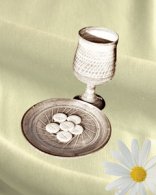 I love taking communion.
You know what I mean? Communion is a sacred act of worship. More than that, it’s a sacramental act of worship, meaning that it’s something we do in the church because Jesus did it, and then commanded his followers to mirror his example.
Because of this, when it’s done, communion has to be well-pastored. You know, the instructions given have to be clear and compelling. Put simply, in order to glean maximum spiritual impact, the congregation should know what it’s getting itself into.
We took communion in church recently. And one part of the officiant’s instructions landed with a thud in my ears and in my heart. He said something like this:
“And after you get the bread and juice, feel free to take communion as a family. Husbands, fathers, you can lead your family in this…or anyone else can lead.”
If you ask me, a little bit of Tertullian there in those instructions…
As I’ve sat with our recent communion experience, I think there are three primary reasons why the meshing of a theology of male headship in the family with the act of communion sits wrong with me.
First, when Jesus inaugurated the institution of communion, he didn’t have anything to say about male headship in the home. For that matter, he didn’t have anything to say about male leadership in the church. Instead, here’s how Jesus framed the first communion instructions, from Matthew 26:26-29:
“While they were eating, Jesus took bread, and when he had given thanks, he broke it and gave it to his disciples, saying, “Take and eat; this is my body.” Then he took a cup, and when he had given thanks, he gave it to them, saying, “Drink from it, all of you. This is my blood of the covenant, which is poured out for many for the forgiveness of sins. I tell you, I will not drink from this fruit of the vine from now on until that day when I drink it new with you in my Father’s kingdom.”
See, nothing in there about male leadership of the communion process.
The second reason why I think those particular instructions are unhelpful is that they presume a common theological understanding that male headship is the way of the Kingdom. And, obviously, if someone like me is sitting in the crowd, that understanding is anything but common or universal.
There are robust arguments to be had about male headship in the home, and, no doubt, Bible-loving, Jesus-pursuing Christians search the Scriptures and disagree. Because of this, it would be best to not just assume a baseline, default theology around headship.
If you do, you risk alienating, or distracting, someone like me, right at the critical and sacramental moment of communion.
Third, and finally, the instructions for husbands, or fathers, to lead in the communion-taking process is problematic because there is inevitably a good chunk of the congregation for whom those instructions will be either painful or irrelevant.
Because, of course, not everyone has a husband or father present on a given Sunday. Maybe the family has been broken apart by separation or divorce. Or maybe mom packs up the kids and brings them to church by herself every Sunday. Or, for the single folks in the room, where do those instructions leave them? Who will lead them into communion? And while I give the officiant props for tacking the “or anyone can lead” phrasing onto his instructions, I worry that the damage had already been done.
It’s not a book specifically about communion, but in her book Blood and Wine, Shauna Niequist talks about the Christian’s approach to table fellowship. Consider these words in the context of communion:
“We don’t come to the table to fight or to defend. We don’t come to prove or to conquer, to draw lines in the sand or to stir up trouble. We come to the table because our hunger brings us there. We come with a need, with fragility, with an admission of our humanity. The table is the great equalizer, the level playing field many of us have been looking everywhere for. The table is the place where the doing stops, the trying stops, the masks are removed, and we allow ourselves to be nourished, like children. We allow someone else to meet our need. In a world that prides people on not having needs, on going longer and faster, on going without, on powering through, the table is a place of safety and rest and humanity, where we are allowed to be as fragile as we feel.”
“The table is the great equalizer.” What a grand vision!
Now let’s not taint the sacrament by making it another place where power is unevenly distributed.
Remembering Pilate’s Wife
 Let’s just say this:
Too many women go unnamed in the Bible.
You know what I mean? While it’s true that some men are not identified (the paralytic in Mark 2:1-12 comes to mind), it seems like more women suffer the indignity of have their name go unrecorded. I’m thinking of women such as the hemorrhaging woman (Mark 5:24-34), the woman caught in adultery (John 8:1-11) and the Caananite woman (Matthew 15:21-28).
To compound the problem, instead of getting named, often women in the Bible get identified according to the men in their life. This makes sense in an overwhelmingly patriarchal culture, but it’s still tragic. So you have Lot’s daughters (Genesis 19:30-38), Peter’s mother-in-law (Matthew 8:14-15), and Philip’s prophetic daughters (Acts 21:9), among others.
You also have Pilate’s wife, from Matthew 27:19.
This past weekend, as I listened to our pastor preach a wonderful Easter sermon, that verse about Pilate’s wife captured my attention. I mean, I’m sure I’ve read, or heard, that verse before, but it had failed to stand out until last Sunday.
For context, Pontius Pilate is about to decide who to release, the innocent Jesus or the criminal Barabbas. It’s clear who the crowd wants, and Pilate, more interested in the keeping the peace than establishing justice, is clearly leaning toward releasing Barabbas.
In the midst of his deliberation, however, a message arrives from Pilate’s wife. Here’s verse 19:
While Pilate was sitting on the judge’s seat, his wife sent him this message: “Don’t have anything to do with that innocent man, for I have suffered a great deal today in a dream because of him.”
Interesting, right? Have you ever really thought about this verse?
This week I did some research, and, for the most part, the commentators don’t have much to say about Pilate’s wife. For most, the significance of verse 19 is in the ironic contrast between the message of Pilate’s wife and the clear preference of the gathered Jews.
For instance, the New Bible Commentary notes:
Nothing else is known of Pilate’s wife. This Gentile woman’s conviction of Jesus’ innocence is in contrast to the prejudice of the Jewish crowd.
OK. Still, I’m left with some questions. Was that just a random dream, or was that a vision from the Lord? If it was a divine vision, what’s the significance? And, how had she heard about Jesus? Had she met him? Is it even possible that she was a believer?!?
In the end, I’m not sure we can answer many of these questions. There’s just not enough data. She’s unnamed, and largely forgotten to history.*
But, maybe, Pilate’s wife should take her place among her sisters.
Because the story of Easter is a story marked the presence of women. Most famously, there’s Mary Magdalene and the other Mary, the first people to bear witness to the resurrection (I’ve blogged about the Marys before, here). I watched a documentary on CNN during Easter week, and one commentator said something like, “for about an hour, Mary Magdalene, and Mary alone, was the church.”
Remarkable.
But maybe not isolated. Perhaps it’s time to add another woman to our list of Easter heroines, an unnamed woman, the governor’s prophetic wife. Because, from that one verse, here’s what we do know about Pilate’s wife:
She was convinced that Jesus’ death was unjust, and she acted on her belief.
Sounds like someone worth remembering to me.
* One interesting theory, articulated by Herbert Lockyer in his book All the Women of the Bible, is that Pilate’s wife was named Claudia Procula, daughter of Emperor Augustus. Citing her appearance in the apocryphal text The Gospel of Nicodemus, Lockyer posits that this is the same Claudia mentioned by Paul (2 Timothy 4:21) and canonized by both the Greeks and Abyssinians, a woman lauded for her faith and devotion to Jesus.
In Print!
 Many years ago, as a young InterVarsity staff worker, I got a short article published in a now defunct magazine called Student Leadership Journal.
Actually, truth be told, “short article” is probably a bit strong; it was more “blurb” than anything else. We had created a new ministry outreach, I noted it in my prayer update, someone at SLJ noticed, and…voila!
But though it was just a blurb, it was my blurb. Something I had written had been printed in ink, in a magazine that someone, somewhere could read, presumably forever.
These days, stuff gets published all the time. In fact, in about 13 hours, I’ll publish this blog post. Truly, one of the great breakthroughs of the internet era is that content can get to more people, more quickly.
Still, if I’m honest, publishing a blog post, be it on my blog or someone else’s, doesn’t feel quite the same as publishing something in print, which is why I am honored to share an article that is appearing in the Spring 2016 edition of Mutuality Magazine, published by Christians for Biblical Equality (CBE).
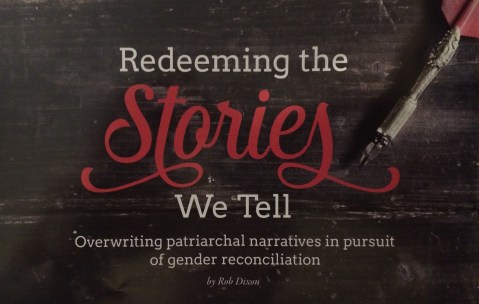
There you go, in case you need some light beach reading…
The article is a written version of a talk I’ve been giving for the past three years here in Fresno to a group of urban ministry folks, and the focus is on gender reconciliation. Using a narrative approach, my aims are to identify three barriers that keep women and men from being reconciled, and to offer solutions in the form of new, better, and live-able stories.
Thanks to the folks at CBE, both for publishing the piece, and for making the article available for free online here. Enjoy!
“Swing”
 You’ve got to love it when your doctoral syllabus includes a novel.
In my case, year 3’s syllabus brought with it the welcome news that I was to read The Boys in the Boat, as a leadership case study. Wow. What a read. The Boys in the Boat is the story of the 1936 Olympic gold medal winning University of Washington crew team. It’s a story of perseverance, valor and, yes, leadership.
And, along the way, I learned a lot about crew. Like more than I would ever need to know. About the boat. About technique. And about what goes into a regatta.
I also learned about something called “swing.” Swing is what happens when the crew team is utterly in sync. When it’s in swing, the boat is operating at optimum level. Predictably, swing is rare and it can be elusive, and it only happens after plenty of training, practice and team-building.
One passage in particular captured for me the idea of swing:
“Bobby Moch set the varsity boys to rowing at a leisurely twenty-two or twenty-three. Joe and his crewmates chatted softly with the boys in the other two boats. But they soon found that they had pulled out ahead without meaning to, just pulling soft and steady. Soon, in fact, they had pulled so far ahead that they could not even hear the boys in the other boats. And then, one by one, they realized that they couldn’t hear anything at all except for the gentle murmur of their blades dipping into and out of the water. They were rowing in utter darkness now. They were along together in a realm of silence and darkness. Years later, as old men, they all remembered the moment. Bobby Moch recalled, “You couldn’t hear anything except for the oars going in the water…it’d be a ‘zep’ and that’s all you could hear…the oarlocks didn’t even rattle on the release.” They were rowing perfectly, fluidly, mindlessly. They were rowing as if on another plane, as if in the black void among the stars, just as Pocock had said they might. And it was beautiful.”
Goose-bumps.
Imagine having a team moment, really only a matter of minutes, be so perfect that the entire group could remember it distinctly some 40 years later!
In my doctoral research, I’ve been using the term “flourishing” to describe the brand of male/female partnerships I’m looking to help form in my organization. “Flourishing” seems a lot like “swing” to me.
And while I don’t (yet) know exactly what goes into achieving swing in the context of inter-gender partnerships in InterVarsity, I do know this:
When we find it, it’ll be beautiful.
Learning from Sacagawea
 Partly in preparation for year three of my program (it’s on the syllabus!), and partly because good friends have issued hearty recommendations, I recently picked up and read a book on the topic of adaptive leadership called Canoeing the Mountains, by Fuller’s Tod Bolsinger.
The book borrows its guiding theme from the 19th century journey of Lewis and Clark. Commissioned by President Jefferson to pursue a water route to the continent’s west coast, Lewis and Clark gathered up a corps of men and off they went. Why canoes? Because they figured that when they hit the continental midpoint, they’d simply be able to load up in the boats and float down to the Pacific.
So, imagine their surprise when they looked up one day and saw:
The snow-capped Rockies.
Hence, the importance of adaptive leadership. For Lewis and Clark, it was time to ditch the canoes and see about rustling up some horses.
To be sure, the book is a worthwhile read for anyone who is trying to guide a community through uncertain circumstances. In particular, I found Bolsinger’s four-fold framework for how to lead in the midst of change helpful. You should read the book, but here it is: start with conviction, stay calm, stay connected, and stay the course.
But of all of the helpful passages in the book, one chapter, entitled “How a Nursing Mother Saved America,” caught my eye. No surprise there, right?
The chapter told the story of Sacagawea, the teenage mother-to-be who joined the corps alongside her interpreter husband. Lauded by Lewis for her “fortitude and resolution,” among other things Sacagawea did translation work, she negotiated with the Shoshone for horses, and she guided the corps through the (to them, but not to her) unknown territories. Indeed, Clark eventually praised Sacagawea as the “pilot” for the expedition.
In sharing Sacagawea’s story, Bolsinger was doing more than celebrating the pioneering achievement of a remarkable woman, though Sacagawea’s valor and industry are certainly praiseworthy.
Instead, Bolsinger was making a larger point, about the relationship between those on the margins and people in power. Specifically, for Bolsinger, in the midst of the shifting seas that the American church finds itself in, it’s critical that those in power learn from those on the margins. He writes:
“The key point here is that for lasting cultural change to occur (even within an institution) those in the center and those outside of the center must be truly engaged and valued in decision-making processes. The interaction of the margins and the center creates new possibilities. The combination of ideas and relationships, the sharing of experiences and especially the valuing of perspective come from a lifetime of living in uncharted territory that is needed for Christendom-trained leaders to move into uncharted territory. When the center engages the insights from the margins, the center comes alive and moves toward the future.”
From time to time, people will ask me about why I think it’s a good thing for men to release power to women.
Frankly, I think there are several reasons (here you go), but a critical one is captured in the story of Sacagawea’s leadership among the Lewis and Clark expedition:
The church will be better equipped to reach the world as it embraces the voices of those on the margins. And given our Tertullianized history, that means creating channels for women to use their voices and to lead.
Simply put, it’s about the mission. We’ll be better able to fulfill our mission if we devise new ways for men and women to equally share power.
Put another way: if we’re going to cross the Rockies, we’re going to need to do away with Tertullian’s canoes…
Let Them Watch!
 When people ask about sports in our family, I always tell them we’re a soccer family. And it’s true. Last Fall, for instance, every Saturday we had 3 kids playing on 3 different teams, and 3 of us were coaching 2 of those teams. And if that sentence confuses you, imagine living it, especially that one Saturday morning when all 3 games coincided…at 8am.
But the truth is that we are a sports family more broadly. And right now it’s volleyball season. Two of our kids are on teams at the moment, so the talk at our dinner table is about sideouts, platforms, sets and spikes.
And, clearly, the volleyball gene in our family comes from my wife. She the one that comes from a family of volleyball geniuses.
And, thankfully, they don’t hail from Iran. A couple of weeks ago, I came across this article, about a pending FIVB (that’s International Volleyball Federation) volleyball tournament being held on an island off the southern coast of Iran.
As the article makes clear, volleyball is big in Iran. Who knew?!? And the men’s team is one of the world’s best. Hence FIVB’s decision to award international tournaments to the country.
So what’s the rub?
Evidently, Tertullian plays outside hitter. Or, perhaps more to the point, Tertullian is running the Iranian sports ministry.
According to the article:
The upcoming men’s beach volleyball tournament could be a celebratory occasion not just on the volleyball courts but also for equality in Iran — if authorities reverse the discriminatory ban keeping women out of matches.
The irony is that volleyball was once an established public space for women, who could attend men’s matches in Iran until 2012, when the decision was made to ban them, without any clear explanation. Since then, gathering online and outside stadiums during the volleyball matches, Iranian women have tried to reverse this ban. Their efforts led to harassment and even arrest.
In 2014, Iranian authorities arrested Ghoncheh Ghavami and some 20 others when they sought to attend a Volleyball World League match at Tehran’s Azadi (“Freedom”) Stadium complex. They were released soon afterward, but Ghavami was rearrested and charged with “propaganda against the state.” She was held in the city’s notorious Evin Prison, including a stretch in solitary confinement, for nearly five months.
Crazy, right?
To sum up, if you happen to live in Iran and are a woman, you are not allowed to watch a volleyball match. And the penalty for doing so can be solitary confinement.
It turns out that FIVB’s own charter, along with the Olympic Constitution, prohibits discrimination of just this kind. And so the article ends with the following exhortation:
Now is the time for the FIVB to tell Iran watching volleyball is no crime for women, and insist on a formal overturning of the ban. The Kish Island Open should not be closed to women.
Here, here.
The above picture is of our daughter Lucy, serving at a recent tournament. Not pictured? Her mom and two sisters, watching from the stands behind her.
As it should be.
 Challenging Tertullian