You Know You’ve Been “Tertullianed” When…
 The other day I received a text message from a friend and co-worker that read like this:
“When I see you later, remind me to tell you how I got “tertullianed” this week.”
Tertullianed?!? Hooray, we’ve achieved made-up verb status! Her story basically went like this:
She was at a brainstorming/planning meeting where she was randomly assigned a table full of people to work with. It turned out that there was a guy at her table that tended to only speak to or make eye contact with the other men at the table. When my friend would offer input, it was largely ignored. On top of all of that, at one point he referred to her as “this young lady,” even though she had been introduced as a key leader at the beginning of the meeting. In the end, though my friend is a great leader with more creative ideas than I’ll ever have, she left the interaction feeling frustrated, unseen and small.
Her story got me thinking. Let’s go along with this verb thing and define “tertullianing” in this way:
tertullian (v): what happens when a woman comes up against the cultural reality of male privilege.
With this definition in mind, as a woman, you’ve been “tertullianed” when…
…you have to head off to work in the morning wondering if the neighbors are judging you for not staying home with the kids.
…you have a conversation with a man where his eyes wander from your eyes to other parts of your body.
…you have to endure language that is dominated by masculine jargon: “Man up!” “Hey you guys” “You’re the man!”
…you’re a runner and you just don’t feel safe running on unpopulated trails or at night.
…as a churchgoer, you are limited in how you can use your gifts because of your gender.
…you have to worry about whether your morning wardrobe choice will either limit your influence or send the wrong message about your sexual availability.
…in the office, you have to watch as less qualified men get promoted ahead of you.
Tertullianing.
Now keep in mind the goal here isn’t to make men feel like crap. Instead, I want to point out that guys like me have privilege and part of that privilege is, in general, not having to contend with lists like the one above. What then should men do with our privilege? Stay tuned!
What about you? What are some other examples of women getting “tertullianed?”
My Take on “Bindergate”
 Unless you live off the grid, or unless you really hate politics, you’ve no doubt heard the “binder” soundbite from last week’s presidential debate. You know, the one where candidate Mitt Romney talks about “a binder full of women.” The moment has been relentlessly (and creatively) mocked. I think my favorites are this one, this one and this one.
Anyhow, here’s the full transcript:
“I said: ‘Well, gosh, can’t we find some women that are also qualified? And so we took a concerted effort to go out and find women who had backgrounds that could be qualified to become members of our cabinet. I went to a number of women’s groups and said, ‘Can you help us find folks?’ And they brought us whole binders full of women.”
Despite a bit of a intrigue about whether Romney sought out the binder or whether it was brought to him, I know what Mitt Romney meant. He was talking about resumes and he just misspoke. He meant to say, “they brought me binders full of (resumes of qualified) women.” Choppy English, but I get his intention.
On top of that, it seems that Governor Romney actually used those binders, once he got them. In fact, his administration hired and appointed women into significant positions of leadership. The other day, former Massachusetts lieutenant governor Kerry Healey was quoted as saying that 10 of the top 20 positions in Romney’s administration were filled by women, including his chief of staff.
In some corners of the media Romney is being vilified as being misogynistic or anti-women, and for every quote like the one above, you’ll find 10 more disputing it. Still, for the most part, I think these characterizations are unfair.
Instead, for me Bindergate offers a window into the grip that male privilege has on Mr. Romney, corporate America and our culture more broadly. Here’s what I mean:
Mitt Romney comes from a corporate context. He’s also spent time in the political arena. To call these sectors of society male-dominated is to understate it. Corporate America is really a bastion of male privilege. For example, as of July only 10% of U.S. Fortune 500 companies were being led by women, and having 20 female Fortune 500 CEOs is an all time record. On top of that, at a corporate governance level, only 16.1% of Fortune 500 Board seats are held by women in this country.
With this as context, it’s not surprising that Mitt Romney needed a binder full of resumes in order to find a suitable female candidate. It’s not surprising, but it is unfortunate. Here’s my thing:
I wish Mitt Romney didn’t need the binder.
Not needing the binder would mean a couple of things. First, that Romney had made it a practice of surrounding himself with capable and gifted women, so that when it was time to fill his administration, it was simply a question of who fit where. Or, it would mean that Romney had been following the careers of up-and-coming women leaders and, now that he had an opportunity, he could champion them into positions of influence. Most of all, not needing the binder would mean that Mitt Romney recognized that in this country the corporate playing field is not level and that as governor-elect he would be in a key position to do something about that.
As long as we have male privilege, we’ll need binders full of women. And I for one am eager to get to a place where we can be binder-free.
What do you think? What would it take for us to be binder free?
About that Time I got Called a False Teacher…
 About 8 years ago now, I got called a “false teacher.” Yes, that still happens. A brother in Christ who barely knew me sat me down and told me that because I was allowing women to teach the Scriptures in the ministry I was leading, I would be held accountable for my false teaching.
Wow. The accusation was painful for me, and it sent me into a months-long quest to learn as much as possible about the theology around the topic of women in leadership. I read, studied, prayed, talked, debated and then read some more. And when I was done with that intense burst of learning, my reading of the Scriptures continued to lead me to the conviction that men and women are to be full partners together in ministry and, in particular, that women are to be free (better yet, empowered) to lead in the Kingdom according to their gifting.
But here’s the catch. When I emerged from this season of learning, I was militant. I mean, if you disagreed with me, I had no time for you. Looking back, I think the experience of being rebuked very nearly turned me into a rebuker! Pretty quickly, the issue of women in authority became a litmus test for me: if you agreed with me, we were cool. If you didn’t, we had problems.
Thankfully, God provoked a trusted mentor to challenge my posture. This guy sat me down one day and basically said, “Rob, I’m concerned that you’re headed toward becoming like that guy. You need to learn how to hold your convictions with humility.”
“Hold your convictions with humility.” That right there is a good word. Amen? Particularly when things are unclear or in dispute, we must be humble. Still further, we must remember that even if we disagree about something important, in the Kingdom we still called to fellowship together in the Lord, understanding that we have far more in common with a brother or sister than we have in dispute.
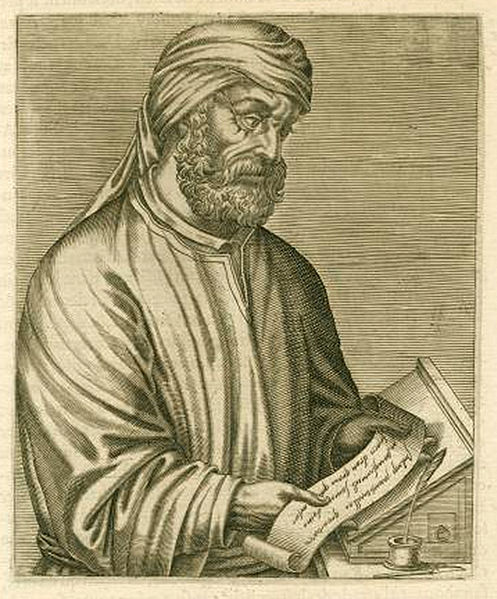
It’s in the spirit of that last statement that I want to introduce a new category on the blog, called “Throwing Tertullian a Bone.” You see, while it’s true that Tertullian had some really bad things to say about women, he also had a lot of great things to say about what it is to pursue Jesus. Don’t get me wrong; I’ll still throw him under the bus from time to time. And yet in the next keystroke, I’ll remind myself and my readers that though we may disagree on one thing, the reality is we agree about far more.
So, enjoy this quote from Tertullian. This is quoted by Josiah Hotchkiss Gilbert in his 1895 Dictionary of Burning Words of Brilliant Writers:
We worship unity in trinity, and trinity in unity; neither confounding the person nor dividing the substance. There is one person of the Father, another of the Son, and another of the Holy Ghost; but the Godhead of the Father, and of the Son, and of the Holy Ghost, is all one; the glory equal, the majesty co-eternal.
Pretty good, eh?
How about you? How are you tempted to not be humble in how you hold your convictions?
The Story of Tommy our Bug Guy, or, A Time I Benefited from Male Privilege
 Recently, convinced that we had a bed bug infestation, Amy and I called out our pest control company. In response, a technician named Tommy stopped by the next day. Tommy took a look around our house, put out some glue traps, checked in with Amy, checked in with me and then he was gone. Altogether, he was in our house for 10 minutes.
After he’d left, Amy and I convened in the kitchen to compare notes, and as we did, what was obvious was that Tommy didn’t think we had a bug problem. Praise the Lord. But at the same time, it was also obvious that Amy and I had had two completely different conversations with Tommy.
To Amy, Tommy had come across as condescending and patronizing. He had treated her as if she was a panicky and uninformed child. In fact, his final words to Amy went like something this: “There, there, darlin’. There’s nothing to worry about!” By contrast, to me he had been polite and cordial, and he had treated me with respect. “Nothing to worry about sir, I think you’re fine.”
What was going on in that interaction? Amy and I had heard the same exact message (“there are no bugs in your house”) but we’d experienced two completely different conversations. I’d left mine without any angst whatsoever. Tommy had treated me as an equal and I basically felt validated by the interaction. Amy, on the other hand, was less than pleased. “Can you believe how that guy treated me?” she wanted to know. Honestly, she felt belittled, unseen and small.
And here’s the ironic thing: Amy knew far more about bed bugs than I did, thanks to hours (and I mean hours!) of research on the internet. I mean, if Tommy was going to have an intelligent conversation with someone who knew something about bed bugs during his visit, it should have been with her!
What we experienced that day is the reality of male privilege, and I clearly benefited. Conscious of it or not (and I’m sure he wasn’t), Tommy had treated me as an equal, as someone worthy of respect, simply because I am male. Of course I would know about bugs and not be troubled by the possibility of them in our house. I didn’t need to be consoled, just informed. By contrast, he treated Amy like he assumed that she needed to be comforted, pacified and instructed.
That’s male privilege in action. And I think that our experience that day was more normal than not.
How about you? Have you ever had an experience like this one? Depending on which side of the interaction you were on, how did you feel?
Defining Male Privilege
Over the last several months, when I’ve matter-of-factly mentioned that I’m doing some thinking and writing on the topic of male privilege, I’ve almost always come up against the same response:
Huh? What’s that?
Doesn’t matter if it’s pastors or seminary students, housewives or firemen, the idea of male privilege is for the most part an utterly foreign concept. So, in this post I’ll offer what has become my working definition. It’ll be in conceptual form, and then I’ll illustrate the heck out this definition in coming posts. Here you go:
Male privilege is a system of advantage based on being male.
Short and sweet, right? Let me break it down into three parts.
First, male privilege is a systemic thing. By their nature, systems are hard to see. They’re subtle. They sort of lurk in the culture, influencing from behind the curtain. I like a quote by a writer named Peggy McIntosh. McIntosh was writing about white privilege (full article here), but I think the description is apt for the context of male privilege:
“I have come to see white privilege as an invisible package of unearned assets which I can count on cashing in each day, but about which I was ‘meant’ to remain oblivious. White privilege is like an invisible weightless knapsack of special provisions, maps, passports, codebooks, visas, clothes, tools and blank checks.”
Next, male privilege is a system marked by a built-in advantage. There it is, systemically embedded in the culture, and yet it’s not passive. Instead, it is a system that clearly awards an advantage. In this way, male privilege is like most systems in that it has an intrinsic bias. I appreciate what Malcom Gladwell says in his book Outliers:
“People don’t rise from nothing. We do owe something to parentage and patronage. The people who stand before kings may look like they did it all by themselves. But in fact they are invariably the beneficiaries of hidden advantages and extraordinary opportunities and cultural legacies that allow them to learn and work hard and make sense of the world in ways others cannot. It makes a difference where and when we grew up. The culture we belong to and the legacies passed down by our forebears shape the patterns of our achievement in ways we cannot begin to imagine. It’s not enough to ask what successful people are like, in other words. It is only asking where they are from what we can unravel the logic behind who succeeds and who doesn’t.”
Finally (and obviously), the system of male privilege offers advantage to men and a simultaneous disadvantage to women. Again, it’s not like men do anything to warrant or access this advantage. It simply comes with the territory of being a male in American culture. In the coming weeks I’ll offer many examples, but given the heightened political atmosphere right now, let me offer one illustration from the realm of government:
Even though 51% of the American population are women, according to a Rutgers University survey, only 23% of elected officials across the country are women.
How do you explain that discrepancy? I submit that a major factor is our culture’s bias toward a system of advantage based on being male. Truly, you and I live in a culture marked by male privilege.
What do you think? Does this definition resonate for you? How would you define male privilege?
On Challenging Tertullian
 I’m sure Tertullian was a really nice guy. More than that, I’m sure he had a lot a great things to say. How else do you become, in the words of theologian Justo Gonzalez, “the founder of Western theology?!?”
So maybe we could chalk it up to a bad day, or just say that he he’d had some unhelpful influences in his life. Or perhaps he’d had a particularly bad dating run lately. Whatever the reason, ol’ Tertullian was the one who wrote these words to women:
“You are the Devil’s gateway; you are the unsealer of that tree; you are the first foresaker of the divine law; you are the one who persuaded him whom the Devil was not brave enough to approach; you so lightly crushed the image of God, the man Adam.”
Ouch, right? Sounds bad, and it is bad. It’s also representative, of a school of thought of which Tertullian was one pupil. And here’s the thing, if you ask me, that school was in session before Tertullian, and, significantly, we’re all enrolled in it today.
With this blog, I want to challenge Tertullian. Or, more to the point, I want to challenge the system of male privilege. I want to think about it, understand it and then discern how Jesus would have me respond to it. And I invite you to join me.
I want you to know what you’ll be getting into, so I’m going to come right out and share where I’m coming from here. Simply put, my thesis is this:
Male privilege exists in our culture and is something that benefits men like me. Since Jesus calls me to surrender everything I’ve got to his leadership, that’s as true for my privilege as it is for my car, house, etc. And as I willfully and joyfully surrender this privilege and invite Jesus to use it, I get to see him empower the women around me and advance his mission in my context.
To engage this thesis, I’ll be blogging here on Mondays and Thursdays, and on other days when the mood strikes me. I’ll be thinking through current events, my life, some theology and I’ll be exhorting us all to grapple with the reality of male privilege. Along the way we’ll have some fun as well.
So if this sounds good to you, please join me. I’ll welcome your comments, particularly if they’re civil.
And, who knows, maybe we’ll get Tertullian to show up and explain himself!
How about you? When you hear the words “male privilege,” what questions come to mind?
 Challenging Tertullian