On Really Teaching Someone
 Note: this is the fourth post in a series exploring how Jesus related with women in his day. Find the introductory post here, and the previous posts here and here.
Yesterday I had the joy of spending the morning in our daughter Grace’s first grade classroom. We did math. We corrected sentences. Maybe my favorite part was playing a game called “whole-number domino war.” It was terrific. Gracie loves to learn and it was profound for me to see her enjoying being in school.
Unfortunately, in our world not every 6 year old girl can have Gracie’s experience.
This is true around the globe, but let’s just look at Africa, and one part of Africa at that. Last Fall, I partnered with an organization called Camfed, the Campaign for Female Education, in a fundraising campaign. According to Camfed, there are right now 24 million girls in sub-Saharan Africa whose families cannot afford to send them to school. More to the point, because of their impoverished condition, these families are forced to choose to send either their boys or their girls to class. Convinced that boys have a better chance of getting a paid job after graduation, it’s the girls who get left behind.
Whether the barriers are economic, cultural or physical, unequal access to education is a global crisis.
The world Jesus was born into was sadly similar. Girls and women were denied access to education as a matter of course. According to The Dictionary of New Testament Background, “…girls were afforded limited opportunities for education. They were schooled by their mothers in the household arts and in those parts of the law that dealt with purity issues and the responsibilities of women.”
In other words, for women in Jesus’ day, their schoolhouse was in their own kitchen.
So this morning, let’s set the record straight. In contrast to the culture of his day, Jesus embraced women as learners. As disciples. As people who were deserving of receiving instruction.
And there’s no better place to see this than in Luke’s Gospel, in 10:38-42:
38 As Jesus and his disciples were on their way, he came to a village where a woman named Martha opened her home to him. 39 She had a sister called Mary, who sat at the Lord’s feet listening to what he said. 40 But Martha was distracted by all the preparations that had to be made. She came to him and asked, “Lord, don’t you care that my sister has left me to do the work by myself? Tell her to help me!”
41 “Martha, Martha,” the Lord answered, “you are worried and upset about many things, 42 but few things are needed—or indeed only one. Mary has chosen what is better, and it will not be taken away from her.”
Friends, I need to tell you that this passage is seriously scandalous. It’s nothing less than social revolution. Because the fact of the matter is that Mary should be in the kitchen with Martha. Put it another way, everything in the culture would push against Jesus choosing to allow Mary to stay where she is.
In the first century, sitting at the feet of another was the position of learning. It was where a disciple sat. And so in allowing Mary to remain where she was, in defending her right to sit there, and in going a gigantic step further by actually rebuking Martha for not joining her sister, Jesus was saying for all to hear that:
Women are worthy to be taught.
So this morning I’m thankful for Jesus, that he welcomes women to sit at his feet and learn from him. That he’s counter-cultural. That he’s pro-women. I’m grateful again for Jesus the gender revolutionary.
The Beauty of Feeling Awkward
 If you’re like me, you’re not used to being in the minority. You know? I mean, unless I opt into it, being displaced is a pretty infrequent experience for me. For instance:
I’m a white person, and I spend most of days around white people.
I’m middle class, and most of the people I interact with come from our middle class neighborhood.
I’m male, and the cultural bent toward male privilege means that I’m comfortable in pretty much every situation I encounter.
So the bottom line is that being in the minority only happens for me when I choose it, or when I’ve worked hard over time to create such contexts. As one example, on the ministry team I lead I am actually in the minority in terms of gender, and that’s the result of a lot of intentionality on my part and on the part of others.
With all of this as prologue, let me tell you about my adventure at our school’s PTC (Parent/Teacher Club) meeting this week.
Because the homework was done, the dishes were in the wash and the children were in the bath, Amy and I decided that this week was our week to finally make our PTC meeting debut. I mean, it’s only taken us 7 years.
So I got my jacket on, walked over to school, found the library, walked through the door and immediately thought:
“Ah, so THIS is where female privilege lives!”
Yep, aside from our school’s principal, who is paid to be there, I was the only man in sight.
So, feeling all sorts of dissonance, I took my seat at the PTC table. Let me offer a couple of reflections on my PTC displacement experience:
First, I felt keenly out of place. As in, “one of these people is not like the others.” It was awkward. And where do you think I sat? Yep, right next to the principal. After all, there’s strength in numbers! I couldn’t help but think about how awful it must be for folks on the margins who feel this way day in, day out.
Next, as we started to work through the agenda, I realized that I was going to be spending the evening being the expert on all things male. As in, “so, would dads want to come to an event like this one we’re talking about?” I kept thinking, “wait a second, I’m just one guy, and I think I’m pretty unusual or atypical, so don’t ask me to speak for all of the men at this school.” Again, how often does this happen to the marginalized around us?
After 17+ years in campus ministry, I can testify that displacement is a helpful thing. More than that, I think it’s just about the main thing. I’ve seen it time and again, where students grow more through even a brief displacement experience than during a whole semester on campus.
Simply put, there’s power in choosing to be the minority.
As I wrestle with how to hold my male privilege, I want to continue to choose displacement. It’s important for me to feel out of sorts, as it both gives me a chance to grow and it helps me to empathize with others.
At the end of the night, the PTC president asked if I wanted to give my phone number so she could invite me to be more involved. My answer? “Yep, but I’m bringing a buddy next month!”
What about you? How can you choose displacement this week?
Jesus is Lord…and Why That Matters When it Comes to Male Privilege, part 1
 I grew up in a really great church. The preaching was inspired, the people were wonderful and we had some gnarly stained glass in our sanctuary. More importantly for me, through the ministry of our church I met Jesus. Remarkable Jesus. Savior of my life. One night at 6th grade summer camp, in a manufactured teepee of all places, I asked Jesus to save me from my sins.
Mission accomplished, right? Done and locked in for all time?
Sorta. When I hit college, I learned about Jesus’ other title. Because while Jesus is indeed our Savior, he’s also our Lord. In fact, the New Testament calls Jesus Savior 24 times and calls him Lord 694 times. That’s right, if we’re scoring at home, Jesus is more 29 times more Lord than Savior.
To be sure, the term “Lord” in today’s vernacular has some baggage associated with it. Calling someone “Lord” conjures up images of carriages and manor houses, stodgy Brits and, worse, tyrannical rulers.
But the Lord I met in college is a far cry from our human version. Jesus as Lord is at once ruler, leader and guide. But he’s also servant, healer and shepherd. He’s complex, our Jesus. Following him as Lord guarantees a life full of deep joy, worthy struggle and all-around adventure.
I love the text in Luke 5:1-11, the one where Simon and his buddies are washing their nets after a fruitless night of fishing. Jesus, teaching nearby, gets into Simon’s boat and has him head back out to fish. It’s really preposterous. In Simon’s professional judgement, and remember, he’s fished that lake since he was a boy, there are no fish.
What happens next is staggering. Not only are there fish, there’s a deadly amount of fish. Nets start to break and boats start to sink. And in the middle of this miraculous chaos, Simon realizes something: Jesus, this Rabbi, knows more about fishing then he does. Like way more. And, convicted that he’s no longer the most qualified person in his boat to run his own life, Simon gets on his knees and confesses to Jesus’ Lordship.
Here, then, is the lesson from Simon:
Everything I’ve got belongs to the Lord Jesus.
More to the point, Jesus gets to decide what happens with everything that I’ve got in my life. Everything.
The list includes material possessions: my food, my car, my iPad, my house. It also includes my time, my relationships, even my plans for the future. Who I hang out with, where I live, what I study, which movies I go to, how I parent and how I spend my money. Each of these things belongs to Jesus and as Lord he deserves and demands a say in how I use what I have.
You know what else makes the list? Male privilege.
So what’s the link between the Lordship of Jesus and this concept of male privilege? I think it’s this:
Men, as we follow Jesus, our joyful task is to discern what it looks like to surrender our socially-granted male privilege for Jesus to do with what he will.
Intrigued? I’ll fill out the “what it looks like” and “what he will with it” parts on Monday.
What about you? What does following Jesus as Lord look like in your life?
The Thankful List
 In my 40 years on this planet, I’ve been blessed to be shaped by many amazing men and women, but on this Thanksgiving morning, I want to specifically acknowledge a few of the women that have formed who I am.
Nina Dixon and Betty Hughes, my grandmothers. There they are, flanking that handsome junior high devil there in the picture, with Betty on the left. When in 2 Timothy 1:5 Paul reminds Timothy of his faith tradition that begins with his grandmother, I really resonate. Betty, my maternal grandmother, came to faith later in life and showed us how to press into Jesus through some really difficult life circumstances. Nina, my paternal grandmother, taught her family the value of being steadfast in prayer.
Ann Dixon, my mom. Really it’s tough to narrow down what I’ve learned from my mom. For sure the list includes generosity, service and perseverance in suffering. Also, I first learned the importance of Kingdom hospitality watching my mom bless the foster kids and international students that we hosted in our home as I was growing up.
Una Lucey, my staff mentor. I’m the campus minister I am because Una signed up for a mentoring role in my life way back in my junior year of college. My 16+ years of fruitful ministry are Una’s as well.
Pat Sexton, my mother-in law. Steadfast, resilient, generous and hopeful. That’s Pat. Plus, she always has my favorite cereal on hand when we come visit!
Dr. Carolyn Stefanco, my college professor and adviser. Dr. Stefanco nurtured in me both a love for writing and a concern for gender issues. In particular, she guided me through my senior project, a study on this amazing woman.
Ruth Haley Barton, author. If you are in ministry and you haven’t read Barton’s Strengthening the Soul of Your Leadership, do so now. Kingdom leadership does not have to lead to burnout!
The Bleeding Woman, from Mark 5:24-34. This unnamed woman has been a companion on my spiritual journey, especially as I have sought Jesus for healing in my life. I love her risk-filled faith, first expressed as she pressed through the crowd to touch Jesus’ cloak but then taken to another level when she came forward publicly in response to Jesus’ question.
Enisa Dedic, General Secretary of the Bosnian IFES movement. What do you do if God calls you to lead a ministry that doesn’t yet exist? You say “yes,” you pray a lot, and then you start it from scratch! Enisa is a woman of courage and perseverance. I love planting new things, and Enisa’s example has inspired that passion in me.
Tina Loveridge, co-worker. I work with an amazing group of women, and Tina is one of them. In particular, Tina has become a partner as I’ve started to think about gender issues in the church. From Tina I’ve learned how to advocate, and she’s opened my eyes to the global injustices that women endure.
And last but in no way least…
Amy Dixon, the amazing soul who married me. 15+ years ago Amy took on this crazy and I’ve been learning ever since. If I’m more patient, less moody, more loving, less angry and more/less a million other things, it’s because God has used Amy to shape me, in word and by example.
What about you? Which women are you thankful for this morning?
About that Time I got Called a False Teacher…
 About 8 years ago now, I got called a “false teacher.” Yes, that still happens. A brother in Christ who barely knew me sat me down and told me that because I was allowing women to teach the Scriptures in the ministry I was leading, I would be held accountable for my false teaching.
Wow. The accusation was painful for me, and it sent me into a months-long quest to learn as much as possible about the theology around the topic of women in leadership. I read, studied, prayed, talked, debated and then read some more. And when I was done with that intense burst of learning, my reading of the Scriptures continued to lead me to the conviction that men and women are to be full partners together in ministry and, in particular, that women are to be free (better yet, empowered) to lead in the Kingdom according to their gifting.
But here’s the catch. When I emerged from this season of learning, I was militant. I mean, if you disagreed with me, I had no time for you. Looking back, I think the experience of being rebuked very nearly turned me into a rebuker! Pretty quickly, the issue of women in authority became a litmus test for me: if you agreed with me, we were cool. If you didn’t, we had problems.
Thankfully, God provoked a trusted mentor to challenge my posture. This guy sat me down one day and basically said, “Rob, I’m concerned that you’re headed toward becoming like that guy. You need to learn how to hold your convictions with humility.”
“Hold your convictions with humility.” That right there is a good word. Amen? Particularly when things are unclear or in dispute, we must be humble. Still further, we must remember that even if we disagree about something important, in the Kingdom we still called to fellowship together in the Lord, understanding that we have far more in common with a brother or sister than we have in dispute.
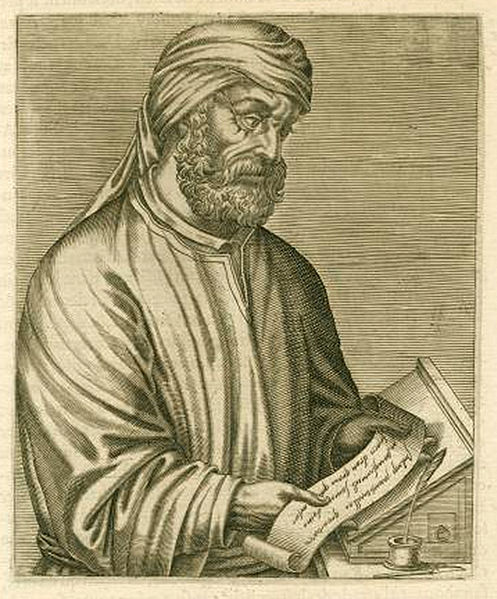
It’s in the spirit of that last statement that I want to introduce a new category on the blog, called “Throwing Tertullian a Bone.” You see, while it’s true that Tertullian had some really bad things to say about women, he also had a lot of great things to say about what it is to pursue Jesus. Don’t get me wrong; I’ll still throw him under the bus from time to time. And yet in the next keystroke, I’ll remind myself and my readers that though we may disagree on one thing, the reality is we agree about far more.
So, enjoy this quote from Tertullian. This is quoted by Josiah Hotchkiss Gilbert in his 1895 Dictionary of Burning Words of Brilliant Writers:
We worship unity in trinity, and trinity in unity; neither confounding the person nor dividing the substance. There is one person of the Father, another of the Son, and another of the Holy Ghost; but the Godhead of the Father, and of the Son, and of the Holy Ghost, is all one; the glory equal, the majesty co-eternal.
Pretty good, eh?
How about you? How are you tempted to not be humble in how you hold your convictions?
 Challenging Tertullian